Is a Waterpik and Water Flosser the Same Thing? A Dental Buyer's Guide
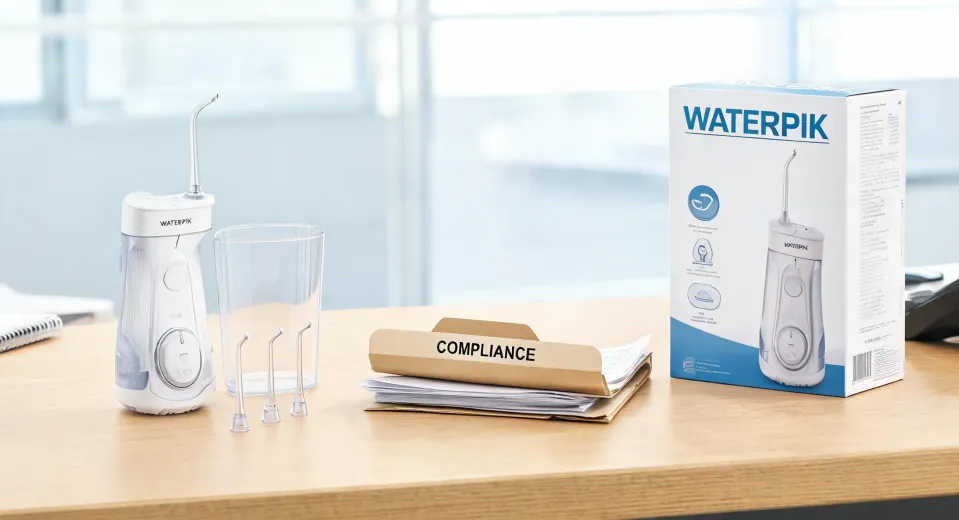
Every few months, the same question lands in my inbox: is a Waterpik and water flosser the same thing? The easy answer is no — Waterpik is a brand, and water flosser is a product category. But if you're the person signing a purchase order, that answer isn't nearly as useful as knowing which scenario you're in.
I've managed procurement for a mid-size dental practice for six years. I've seen this question come up in three different situations: a dentist wants to know what to recommend to a patient, an operations lead wants to know what to stock in treatment rooms, and a patient wants to know which device to buy for home. Same words, different decisions.
Here's how I break it down.
First, the Category Question
Let's get the definition out of the way. A Waterpik is always a water flosser, but not every water flosser is a Waterpik. It's the same as "Kleenex" and "tissue." The brand became the name people use for the whole category.
The category term tells you nothing about clinical effectiveness, build quality, tip compatibility, or warranty support. The brand term points to a specific set of models, each with its own features and limitations. So when someone asks me "is a Waterpik and water flosser the same thing?" I answer with another question: "What are you trying to decide?"
Scenario 1: You're Making a Clinical Recommendation
If you're recommending a home-care device for a patient, I'd name the device, not just the category. The reason is evidence. Several Waterpik models carry the ADA Seal of Acceptance, and much of the published research on water flossers that I've relied on in our practice was performed using Waterpik devices. As of early 2025, the ADA Seal list is still my first stop before adding a new model to our patient-education materials. That makes the recommendation easier to defend when a patient walks into a store and sees a wall of "water flossers" at very different prices.
I don't have hard data on every generic unit out there, and I can't say they're all ineffective. But from a clinical standpoint, I'd rather point a patient toward a product family with documented testing and clear quality controls. If the patient already owns a generic unit and uses it consistently, I don't tell them to junk it. My experience is based on a single practice, so if you're running a large group or a public-health clinic, your support costs and failure rates will differ. I can only speak to what our invoices show.
One boundary I won't cross: a water flosser is not a complete replacement for manual flossing or professional cleanings. I still recommend manual floss for patients who are flossing correctly. A water flosser is an additional tool, not a substitute for everything.
Scenario 2: You're Buying for a Dental Clinic
This is where my procurement side takes over. When we're choosing a water flosser for clinic use, I don't compare list prices. I compare total cost of ownership over 18 to 24 months.
Here's a real example from our practice. A generic water flosser quoted at $45 looked like the obvious choice next to a $70 Waterpik. Then we stocked it in two treatment rooms. One unit stopped building pressure after four months. Two generic heads didn't seat correctly and leaked on the tray. Our assistant spent two hours on the phone with a support line before the vendor agreed to replace the unit. When I added up the original purchase, the replacement shipping, the wasted heads, and the staff time, the $45 device had cost us the equivalent of a $90 purchase.
That surprise taught me to run a TCO checklist before ordering anything:
- Device price plus shipping and any handling fees
- Replacement tip or head cost over 12 months
- Expected lifespan based on our past clinic orders
- Warranty coverage and responsiveness
- Staff time for setup, cleaning, and troubleshooting
In my first year, I made the classic procurement error: I ordered the cheapest replacement heads without checking compatibility. They looked right but didn't snap in properly. That cost us a Saturday repair call and a very annoyed hygienist.
When I'm specifying a Waterpik water flosser head, I also think about the tip style. Standard Jet tips work for most patients, but Plaque Seeker tips and Orthodontic tips serve specific clinical needs. Ordering the right head the first time avoids waste, extra shipping, and another round of email follow-ups.
I use the same logic I would for a purchase like water softener prices installed. The headline number never tells the whole story. You have to confirm installation, fittings, disposal fees, and maintenance before you know the real cost. A water flosser has its own hidden lines: consumables, downtime, and compatibility.
There's also a limit to how much "cheap" makes sense. A $20 Bella electric kettle in the break room is fine because the worst case is lukewarm tea. A water flosser that fails mid-week affects patient flow and staff confidence. I treat it as clinical equipment, not as a disposable consumer gadget.
Scenario 3: You're Helping a Patient Choose for Home
When the question comes from a patient, I tell them to start with their own situation, not with the brand name or the category label.
If counter space is tight or the patient travels, a cordless model may be worth the extra upfront cost. A countertop model with a larger reservoir is often easier for a household with multiple users. If the patient has arthritis or limited hand dexterity, a larger handle and simple controls matter more than any clinical study. And if the patient already owns a water flosser that works, my advice is simple: use it consistently.
That last point goes against the obvious sales answer, but it's true. A recommendation only helps if the patient actually follows through. I've had patients ask me how a new device "works" when the real problem was that they hadn't used the old one in six months.
This is the same conversation as someone asking how does a smart bulb work with Alexa. The smart bulb is the easy part. The compatibility question—what setup do I have, do I need a bridge, what am I trying to automate—is where the real decision lives. With a water flosser, the compatibility questions are: countertop or cordless? Is the reservoir big enough? Can the patient reach the settings and clean the device easily? Answer those first, and the brand choice gets much simpler.
How to Decide Which Situation You're In
If you're still unsure which lens to use, the fastest way to pick is to look at the next action.
- You're about to recommend something to a patient. Start with clinical evidence and any seal of acceptance, then name a product family. That's Scenario 1.
- You're about to place an order for a clinic or office. Start with total cost of ownership, not sticker price. That's Scenario 2.
- You're helping an individual choose a device for home. Start with the person's environment, habits, and physical needs. That's Scenario 3.
And if someone still wants a simple answer to "is a Waterpik and water flosser the same thing?" here's mine: a Waterpik is a water flosser, but not every water flosser is a Waterpik. Whether that distinction matters depends on whether you're making a clinical call, a procurement call, or a personal purchase. I've been part of all three, and they don't always point to the same answer.

Greta Lindholm
Greta Lindholm is a household refrigeration analyst covering French-door, side-by-side, top- and bottom-mount refrigerators, mini fridges, beverage coolers, chest freezers, and upright freezers. She applies IEC 62552 and IEC 60335-2-24 while comparing energy consumption, usable volume, pull-down time, compartment temperature stability, freezing capacity, noise, door-seal leakage, refrigerant charge, and ambient-temperature performance. Her guides help importers, distributors, private-label teams, and appliance engineers select platforms around climate class, storage mix, efficiency labels, cabinet dimensions, service access, shipping density, and warranty exposure.