Waterpik Aquarius vs Philips Sonicare: What a Procurement Manager Actually Notices
-
The Problem Everyone Focuses On: Which Brand Wins?
-
The Deeper Issue: Total Cost of Ownership Gets Ignored
- The Real Cost Drivers You Will Hit
-
The Financial Risk of Ignoring This
-
What About the Philips Sonicare vs Waterpik Debate?
-
Why the Aquarius Professional Designer Series Specifically
-
A Quick Word on Maintenance and Replacement Parts
-
The Simple Framework That Works
-
The Takeaway
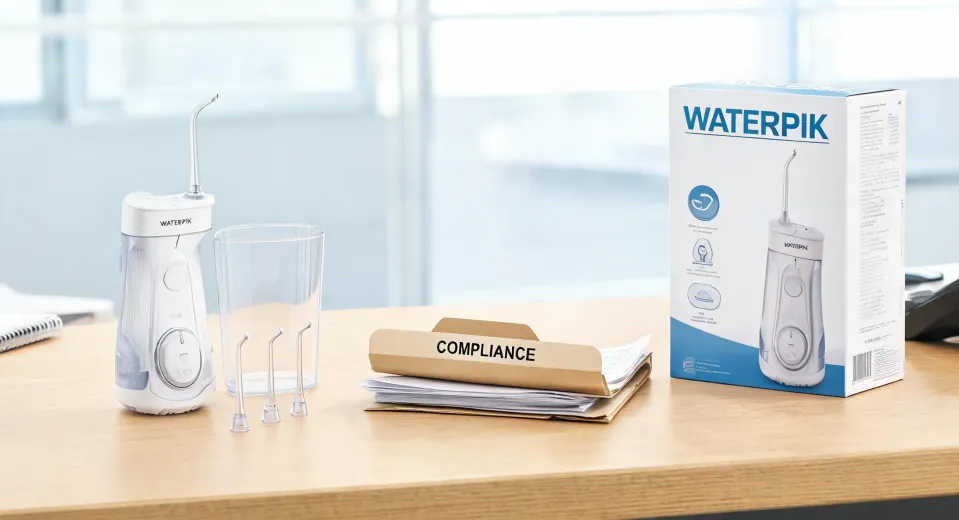
When you're the person signing off on dental practice purchases, the first thing you notice about the Waterpik Aquarius Professional Water Flosser is the price. Not because it's outrageous. Because it's higher than the cordless models and higher than some Sonicare bundles. If you've been in procurement long enough, you know that's exactly where the story starts, not where it ends.
I manage supply budgets for a 12-person dental clinic group, roughly $180,000 in cumulative spend over the last six years. Water flossers and replacement tips are not the biggest line item. But they're the kind of recurring purchase that quietly eats a budget if you only look at the shelf price.
The Problem Everyone Focuses On: Which Brand Wins?
Most comparison articles frame this as a boxing match. Waterpik Aquarius versus Philips Sonicare. One device, one winner, one recommendation. And honestly? That framing misses the actual problem for anyone buying in bulk.
The real question isn't which water flosser has a better clinical study behind it. Both brands have evidence. The question is what happens six months after you hand one to a patient or put one in an operator room.
Here's what I learned the hard way: replacement tips, tip storage, and unit durability determine your true cost per device. Not the Amazon price. Not the marketing photos.
The Deeper Issue: Total Cost of Ownership Gets Ignored
I didn't fully understand this until Q2 2024, when I compared three vendor quotes for a clinic refresh. We needed ten Waterpik Aquarius Professional units plus a year of replacement tips. One distributor offered a slightly lower per-unit price. Another bundled tips at a discount. The third had free shipping but charged a restocking fee if any units arrived damaged.
At first glance, the difference was maybe 4%. After I mapped out shipping, tip replacement intervals, and the cost of a single defective unit that had to be returned, the gap stretched to 13%.
That's the deep problem with purchase decisions in this category. It looks simple. It's not.
The Real Cost Drivers You Will Hit
Replacement Tips Are the Subscription You Didn't Sign Up For
Every Waterpik Aquarius unit needs replacement tips eventually. Professional guidelines typically recommend replacing tips every three to six months, depending on usage. For a clinic, that means every patient-facing tip has a lifecycle. If you're not tracking that, you're not tracking your actual cost.
This is where I see clinics make the same mistake over and over. They buy the flosser, celebrate the discount, and ignore the consumable cost until the next reorder hits. Then the finance person starts asking questions.
My advice: calculate cost per patient use, not cost per unit. That single shift in thinking changed how we bought everything.
Cordless Convenience vs Corded Reliability
The Waterpik Aquarius Professional Water Flosser is corded. The Waterpik Cordless Advanced, as the name implies, is not. For a patient at home, cordless might win. For a clinic where devices sit in the same operatory all day, corded means no charging stations, no battery degradation, no downtime.
I still kick myself for not realizing this earlier. We bought cordless models for two operatories because a clinician specifically requested them. Within eight months, one unit wouldn't hold a charge. The repair logistics cost more than the device. We switched back to corded Aquarius units and haven't had a battery issue since.
The Financial Risk of Ignoring This
Let's put numbers on it. Say you buy five Waterpik Aquarius Professional units for your practice at roughly $90 to $110 each (pricing as of January 2025, and it varies by distributor). Add replacement tips for a year. Add the chance that one unit gets dropped or stops working. Add the staff time to reorder and replace.
Over a 24-month horizon, the difference between a well-planned purchase and a rushed one is not $50. It's more like $300 to $500 across five units. For a small practice, that's meaningful. For a larger one, it's the difference between a tidy supply budget and an explainable overage.
The surprise wasn't the price of the Waterpik Aquarius. It was how much hidden cost lived in the accessories and the operational decisions around it. That's true whether you're comparing it to Sonicare or to a cheaper generic water flosser.
What About the Philips Sonicare vs Waterpik Debate?
Since I get asked about this constantly, here's the procurement take.
Philips Sonicare is primarily a sonic toothbrush brand. They do have some oral irrigation options, but the core engineering and clinical identity is brushing. Waterpik's core identity is water flossing. The Aquarius Professional sits in that world.
If you're choosing between a Waterpik Aquarius and a Philips Sonicare toothbrush, you're not really comparing two versions of the same thing. You're comparing a water flosser to a power toothbrush. Many patients should reasonably have both.
And before you ask: no, I'm not going to trash Sonicare. It's a solid brand. But when a clinic asks me which device they should stock for water irrigation specifically, the Waterpik Aquarius Professional is the safer recommendation. Not because it's the cheapest. Because its replacement tips are widely available, the unit is designed for countertop use, and the clinical evidence for water flossing specifically is well documented.
Why the Aquarius Professional Designer Series Specifically
You'll see the Designer Series version of the Waterpik Aquarius advertised at a higher price. From a procurement perspective, the main differences are aesthetic and slight design updates. If those differences make patients more likely to keep the device visible and actually use it, there's value in that.
But if you're strict about cost-per-unit and the device is going into a drawer or a back room, the standard Aquarius Professional may be the smarter buy. This is one of those decisions where I tell clients to be honest about their actual usage, not their aspirational one.
A Quick Word on Maintenance and Replacement Parts
Waterpik sells replacement tips in multi-packs. That seems obvious, but you'd be surprised how many first-time buyers forget to order them at the same time as the unit. Shipping them separately eats your margin.
Also, check the water reservoir seal and the tip eject button after you unbox each unit. We had one defective unit out of a batch of eight in 2023. The distributor replaced it, but only because we documented the issue within the return window. That's why I tell procurement folks: open every box in the first week. Don't wait until the device reaches a patient room three months later.
The Simple Framework That Works
Bottom line, here's what I use when evaluating any oral care device purchase:
- Compare total cost over 24 months, not the unit price.
- Factor replacement tip cost and ordering frequency.
- Decide whether corded or cordless makes sense for the actual location.
- Buy from a distributor with a clear return policy.
- Order tips in the same purchase order as the units to save shipping.
That framework has saved us more than any brand loyalty ever did. It also helps when a sales rep tries to sell you on a premium bundle you don't need. You can politely run the numbers and watch the pitch fall apart.
The Takeaway
The Waterpik Aquarius Professional Water Flosser is a solid, clinically supported device. The Philips Sonicare comparison is a distraction if you're actually trying to solve a water flossing need. And the real procurement risk isn't choosing the wrong brand. It's ignoring the cost of what comes after the purchase.
Small practices and first-time buyers often worry they'll get treated poorly because they're not ordering huge volumes. I've been there. The suppliers who took my small early orders seriously are the same ones I trust now with larger contracts. Don't settle for a vendor who makes you feel like your $200 order is a bother. Good suppliers understand that small orders are how relationships start.
Whatever you decide, document your process. Track your replacement tips. Calculate the true cost. And don't let a $10 price difference make you lose sight of the $100 you'll spend on consumables later.

Greta Lindholm
Greta Lindholm is a household refrigeration analyst covering French-door, side-by-side, top- and bottom-mount refrigerators, mini fridges, beverage coolers, chest freezers, and upright freezers. She applies IEC 62552 and IEC 60335-2-24 while comparing energy consumption, usable volume, pull-down time, compartment temperature stability, freezing capacity, noise, door-seal leakage, refrigerant charge, and ambient-temperature performance. Her guides help importers, distributors, private-label teams, and appliance engineers select platforms around climate class, storage mix, efficiency labels, cabinet dimensions, service access, shipping density, and warranty exposure.