Waterpik Pearl vs Pulse: A 5-Step Checklist for Dental Clinics That Can't Afford to Get It Wrong
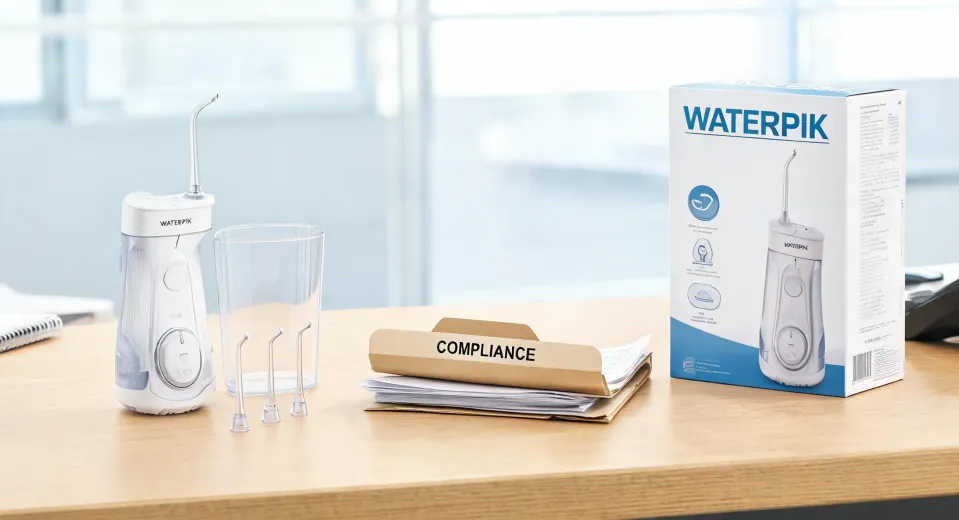
-
Step 1: Define the Use Case Before You Compare Models
-
Step 2: Verify Which Model the Clinical Evidence Actually Covers
-
Step 3: Check Tip Compatibility Before You Order
-
Step 4: Calculate the Total Cost, Not Just the Invoice
-
Step 5: Verify Stock and Lead Time Before You Promise Anyone Anything
-
Common Mistakes I Still See
In my role coordinating equipment supply for dental practices, I've handled 200+ rush orders in the last six years—including same-day turnarounds for clinics that needed a water flosser before their next patient walked in. When a clinic calls me on a Thursday afternoon asking whether to order the Waterpik Pearl or the Pulse for a Monday event, I don't pull up a spec sheet. I run a five-point checklist.
That's what this is: the checklist. If you're a clinic purchasing manager, a distributor, or a dentist trying to settle the "Pearl vs Pulse" question—or honestly, just asking whether Waterpik is the best water flosser for your setting—these five steps will get you to a defensible answer. Read through it once, and you'll probably never order the wrong unit again (note to self: I should have written this down years ago).
Step 1: Define the Use Case Before You Compare Models
The Pearl and Pulse may share the Waterpik name, but they're different tools with different strengths—reservoir size, battery life, pressure settings, the usual suspects. In my experience, clinics that order the wrong one did it because they compared prices before they compared use cases. That's backwards.
Three questions to answer before anything else:
- Will this unit live in a treatment room, or is it going home with patients?
- How many patients per day will use it?
- Who operates it—a hygienist or the patient?
Why does this matter? Because a device for chairside use with a steady patient flow needs a reservoir that can keep up. A patient can easily run a full minute or more; refilling mid-treatment doesn't sound like a big deal until you're on your third patient of the morning. The model with the smaller tank becomes a brake on your schedule no matter how much you paid for it.
The rule I use: in-clinic, multi-patient use → favor the larger reservoir. Home-use, take-home, or mobile use → favor the more portable unit. Once you pick the context, the right model usually picks itself.
Step 2: Verify Which Model the Clinical Evidence Actually Covers
Now the question I hear from every buyer at some point: "Is Waterpik the best water flosser?"
Here's the honest answer I give. Waterpik has more published clinical research behind its water flossers than any other brand in this category. According to Waterpik's clinical research library, more than 70 studies have been published on their oral irrigators. For a B2B buyer selling to periodontists and hygienists, that's not a small thing—it's a difference you can defend in a consultation.
But here's the catch: the clinical evidence doesn't automatically apply to every model in the lineup. If a clinician asks, "Does this model have the same backing as the one in the study?" you need an answer that doesn't dissolve into "I think so."
The five-minute verification: before you commit to a model, check which one the studies actually used. A credible supplier should be able to tell you, or at least show you where to look. If they can't—well, that tells you something too.
One more thing I've noticed: clinics that sell water flossers as a "clinical recommendation" want evidence. Clinics that stock them as an "optional patient convenience" care more about margin. Figure out which one you are before you spend time reading studies. It saves a lot of decision fatigue.
Step 3: Check Tip Compatibility Before You Order
This is the step everyone skips, and I genuinely don't know why.
I made this mistake myself early on. I assumed that since it's all Waterpik, the tips are interchangeable across models. Didn't verify. Turned out a clinic I was supplying had to order four different tip packs because the models scattered through their practice didn't share a single configuration. It wasn't a catastrophic failure—just an avoidable headache. For a clinic, tip compatibility matters twice over: you need enough tips for multiple patients, and you need patients to find replacements on their own.
The step you should not skip: confirm the tip configuration your chosen model takes before ordering, and check your distributor's stock of replacement packs in the same order if you can. Five minutes up front prevents a month of back-and-forth.
One clinic I work with standardized on a single model specifically because it meant stocking one tip type. That one decision simplified their storage, their ordering, and their staff training. It's the kind of thing you don't think about until you've managed inventory for a practice with four different units.
Step 4: Calculate the Total Cost, Not Just the Invoice
Here's where I've learned the most. A clinic sent me a PO for the lower-priced unit last year, drawn in by a dealer discount that seemed too good to pass up. When I ran the numbers with them—warranty terms, battery lifespan, tip replacement costs over 12 months—the cheaper unit projected to cost more within a year. They were surprised. I wasn't.
It took me about three years and 150+ orders to understand that the cheapest quote is rarely the cheapest product. There's a difference between "price" and "total cost," and the gap gets wide fast when equipment is used multiple times a day.
Add these into your calculation:
- Battery lifespan and replacement cost (for cordless models)
- Warranty terms—what's covered, who handles the claim, who pays shipping
- Tip replacement frequency and cost per tip
- Downtime cost if the unit goes back for repair
- Staff training time on a new model
One more thing: checking these numbers before you order takes twenty minutes. Skipping that check and getting it wrong takes a return label, a phone call, a replacement shipment, and a conversation with a disappointed clinician. Five minutes of verification beats five days of correction—I've lived both, and I strongly prefer one of them.
Step 5: Verify Stock and Lead Time Before You Promise Anyone Anything
This is the part of my job that keeps me honest. In March 2024, a client needed 20 units for a dental conference with about 36 hours of lead time. The distributor confirmed stock, the order was placed, and the shipment did arrive on time—but only because I was on the phone confirming the tracking number within an hour of the order. If I'd trusted the confirmation email to mean it was moving, I could have lost the contract.
The general principle: the more urgent the order, the more manual verification it gets. No exceptions. For any time-sensitive purchase, do this in order:
- Is it in stock at your distributor? Get it in writing.
- What's the shipping method and cutoff time?
- What's your fallback if the shipment gets delayed?
On that last point: our company policy now requires a 48-hour buffer for stock promises because of a $12,000 contract we lost in 2023. We trusted "in stock" at face value, and it turned out the inventory system was counting display units. The client didn't care about the explanation.
Common Mistakes I Still See
Let me close with three mistakes that show up in my inbox with surprising regularity.
Mistake 1: Treating all Waterpik models as clinically identical. They're not. If you're selling on evidence, know exactly which model the evidence supports. Saying "Waterpik has studies" is not the same as "this model has studies."
Mistake 2: Buying on price before checking the reservoir size. The difference between a 45-second reservoir and one that lasts several minutes is invisible on a price list and very visible in a treatment room.
Mistake 3: Assuming the distributor has already verified compatibility. They haven't. It's your order. Own the details.
And since the "best water flosser" question is probably still in the back of your mind: Waterpik is the brand with the strongest clinical track record in the category, and I do not say that lightly—I've supplied enough different brands to know the weight of published evidence behind each one. But "best" is contextual. The best model for a high-volume periodontal practice isn't automatically the best for a mobile dental van. The checklist is how you make that call with your eyes open.
That's the whole thing. Define the use case. Verify the evidence. Check the tips. Add up the real cost. Confirm the logistics. Five steps, five minutes each. The most expensive mistake a clinic can make is the one they could have caught before ordering.

Greta Lindholm
Greta Lindholm is a household refrigeration analyst covering French-door, side-by-side, top- and bottom-mount refrigerators, mini fridges, beverage coolers, chest freezers, and upright freezers. She applies IEC 62552 and IEC 60335-2-24 while comparing energy consumption, usable volume, pull-down time, compartment temperature stability, freezing capacity, noise, door-seal leakage, refrigerant charge, and ambient-temperature performance. Her guides help importers, distributors, private-label teams, and appliance engineers select platforms around climate class, storage mix, efficiency labels, cabinet dimensions, service access, shipping density, and warranty exposure.