Electric Flosser vs. Waterpik: What to Order When Your Clinic Can't Afford to Wait
The Answer, Up Front
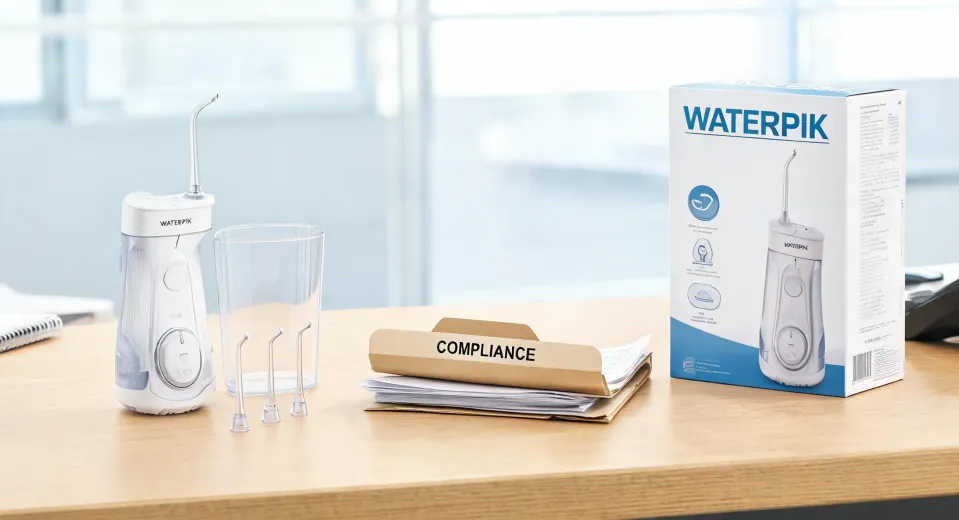
If you need to make a device recommendation this afternoon, here it is: for most dental clinic settings, the Waterpik Cordless Advanced Water Flosser White is the default choice. Not because it's the cheapest—it isn't. Not because a sales rep convinced me. But because after more than 200 rush equipment orders for dental practices, it's the option that best balances clinical evidence, patient compliance, and operational simplicity.
Electric flossers—the rechargeable, floss-head style from brands like Oral-B and Philips—aren't bad devices. They're just not the same tool as a water flosser. And confusing the two is the most expensive mistake I see clinics make when they're under pressure.
I'm coming at this from a specific vantage point. I'm the person clinics call at 4 PM on a Friday when a new location is opening Monday, or when an equipment order disappears into a logistics black hole. I've handled rush orders ranging from $500 to $15,000 across the last six years, including a same-day turnaround for a dental group that needed patient education kits before a weekend industry event. This article is the condensed version of a conversation I've now had close to a hundred times.
Why "Both Are Great" Would Be the Wrong Answer
The phrase "electric flosser vs. waterpik" gets searched constantly, but it frames the comparison badly. These devices get grouped together in product catalogs and retailer filters, yet they work on entirely different principles.
A Waterpik water flosser shoots a pulsating stream of water that removes plaque and food debris from between teeth and below the gumline. Typical pulsation runs 1,200 to 1,400 pulses per minute. An electric flosser uses a mechanically driven floss head to automate the action of traditional string floss. Both can improve oral hygiene. But they're not substitutes—they're different mechanisms that happen to share a category label.
Here's where my view changed. Everything I'd read around 2020 suggested electric flossers were rapidly closing the gap. On paper, the numbers looked comparable at a lower price point. In practice, for my clinic clients, the Waterpik units produced meaningfully better patient follow-through. (Which, honestly, surprised me. I went into this expecting to write the opposite conclusion.)
When I followed up with dental staff to understand why, the answer was almost embarrassingly simple: patients actually use the Waterpik. A white Cordless Advanced unit on a bathroom counter is visible, feels like a durable device, and takes about ten seconds to operate. An electric flosser—for patients who weren't flossing regularly in the first place—feels like an expensive version of the task they were already avoiding.
Clinical Evidence Isn't Optional
This isn't a vibes-based recommendation. The reason I feel comfortable making it under time pressure is that the evidence is well established and published. Water flossing, used in combination with brushing, has been shown in peer-reviewed clinical research to reduce plaque and gingivitis. The pulsation mechanism matters: it's not just water pressure—it's the rapid pulsation that helps flush out areas that string floss can struggle to reach effectively.
Per FTC advertising guidelines (ftc.gov), any product claim must be substantiated. That's a genuinely useful filter when you're evaluating oral care devices. If a company can't point to published, peer-reviewed studies, and instead leans on anecdotal marketing language, that's a red flag. This is exactly what I look for when evaluating a product for a clinic that doesn't have time to do the research themselves.
One clarification that matters: the research supports water flossing as an addition to regular brushing and professional care, not a replacement for them. Anyone who tells you a device eliminates the need for professional cleanings is overstating the evidence. The fundamentals of oral health haven't changed. What's changed is the toolkit we have available.
The 15-Minute Decision Frame
When a clinic calls in panic mode, I don't walk them through a 40-page comparison. I use a three-question frame, and I'd encourage any practice manager or procurement person to do the same.
Three things to check: patient population, use case, and total budget. In that order.
- Patient population. Who is actually going to use this? For general practice use, the Waterpik Cordless Advanced Water Flosser White is the most intuitive unit I've come across. Two pressure settings, a rotating tip, a simple on/off switch—most patients figure it out without instructions. Models with seven or ten settings sound like a feature but, in practice, overwhelm a subset of patients. Simpler wins in real-world compliance.
- Use case. Are you stocking the operatory for in-clinic demos? Sending patients home with a recommendation? Selling take-home kits at the front desk? The Cordless Advanced handles all three because it's rechargeable and doesn't require a permanent counter spot. If the device stays in one treatment room, a corded unit like the Waterpik Aquarius gives you more pressure capacity at a lower cost per use. I went back and forth on cordless versus corded for a client a few years ago. The Aquarius made sense on paper—stronger water pressure, lower cost, no battery to manage. But my gut said the clinic would eventually want to move the device between rooms. They did, within three weeks of opening. That's when I stopped treating cordless as a premium upgrade and started treating it as the standard for most practices.
- Budget. Not the sticker price. Total cost: unit cost, tip replacement schedule, warranty coverage, and the hidden cost of patient confusion. A clinic told me last year they'd saved roughly $30 per unit by ordering a generic electric flosser for their take-home program. Three months later, they'd spent more in staff time answering patient questions and troubleshooting complaints than the initial savings. (Penny-wise, pound-foolish. I've made the same class of mistake myself, so I recognize it instantly in others.)
The 36-Hour Case That Locked In My Process
In March 2024, a dental group called me on a Thursday afternoon. They were opening a new location that Monday, and their equipment order—placed three weeks earlier—had been lost in a freight forwarding error. They needed patient demo units, take-home recommendations, and a six-month supply of replacement tips.
Normal turnaround for that kind of order is two weeks. They had 36 hours.
We sourced ten Waterpik Cordless Advanced units in white—the model they'd originally selected—verified the clinical evidence summary for their staff orientation, and arranged expedited shipping. Rush fees came to $800 on top of a $2,400 base cost. The alternative was opening a new clinic without patient-facing oral health tools. The $800 was expensive. The alternative was worse.
When you already know the right answer, an emergency is just an execution problem rather than a decision problem.
The clinic didn't spend a single minute debating which device type to order. They already knew. They just needed someone to execute at speed.
What's Changed by 2025 (and What Hasn't)
Five years ago, the conversation around water flossers was more defensive. Dental professionals asked whether they were a legitimate clinical tool or a gadget fad. That debate is settled. The research is there, and the products have matured substantially.
What was best practice in 2020 doesn't necessarily hold in 2025. The first generation of cordless water flossers had battery degradation issues and occasional leaks that made some clinicians hesitate to recommend them. The current generation, including the Cordless Advanced, has largely addressed those problems. Battery life is better, seals are more reliable, and the form factor is genuinely portable. The execution has transformed, even as the fundamentals haven't.
Patient expectations have shifted too. Your patients have seen water flossers on social media, in hotel bathrooms, and in friends' homes. They're asking for them by name. That creates a practical reality for clinics: if your oral care recommendations don't include a water flosser option, a segment of your patients will buy one anyway—without any professional guidance on how to choose.
Edge Cases: When the Default Doesn't Apply
I've made the case for the Waterpik Cordless Advanced as the default. But a default is not a universal. Here are the situations where I'd honestly recommend something else:
- High-volume community giveaways. If you're purchasing 200 units for a health fair, the cost per unit changes the decision. A different product tier may let you serve more people with the same budget.
- Severe dexterity limitations. For a patient with advanced arthritis who can't hold a water flosser steady, an electric flosser with a lightweight handle may genuinely serve better. That's a supplemental recommendation, not a reason to change your baseline.
- Permanent in-clinic installation. If the device never leaves a treatment room, cordless is not an advantage—a corded unit often provides stronger water pressure and eliminates battery management entirely.
- Patients who dislike the sensation. Some patients try a water flosser and don't enjoy it. That's legitimate. For them, manual floss with proper technique remains a perfectly good recommendation. (The traditional option still works—it always did.)
There's also the broader market shift to keep an eye on. The line between electric flossers and water flossers is blurring. Some manufacturers are combining sonic toothbrush heads with water floss functions. Waterpik's own Sonic Fusion line is an example of that convergence. As of January 2025, if you can only stock one device type, I'd still say water flossing is the stronger investment for compliance and outcomes. But I'm watching this space closely, and my answer a few years from now could look different.
The Bottom Line
Here's what I want you to take away: the right question isn't "which device wins on a spec sheet." It's "which device should this practice order, for this patient population, with the time and budget available?" In most cases, that answer is the Waterpik Cordless Advanced Water Flosser in white.
When you have two days to research, read the studies and compare models in depth. When you have two hours—or two minutes—you need a defensible default answer you've already stress-tested. That's what this article is for. I've done the stress-testing, across hundreds of orders and more than a few 4 PM Friday panics.
Use the default. Trust the evidence. And when an edge case arrives, you'll recognize it because it will look different from the ninety percent. That's the moment to slow down and reconsider.

Greta Lindholm
Greta Lindholm is a household refrigeration analyst covering French-door, side-by-side, top- and bottom-mount refrigerators, mini fridges, beverage coolers, chest freezers, and upright freezers. She applies IEC 62552 and IEC 60335-2-24 while comparing energy consumption, usable volume, pull-down time, compartment temperature stability, freezing capacity, noise, door-seal leakage, refrigerant charge, and ambient-temperature performance. Her guides help importers, distributors, private-label teams, and appliance engineers select platforms around climate class, storage mix, efficiency labels, cabinet dimensions, service access, shipping density, and warranty exposure.