Waterpik Water Flosser 2.0 vs. Cordless Advanced (20022493): A Dental Practice Buyer's Verdict
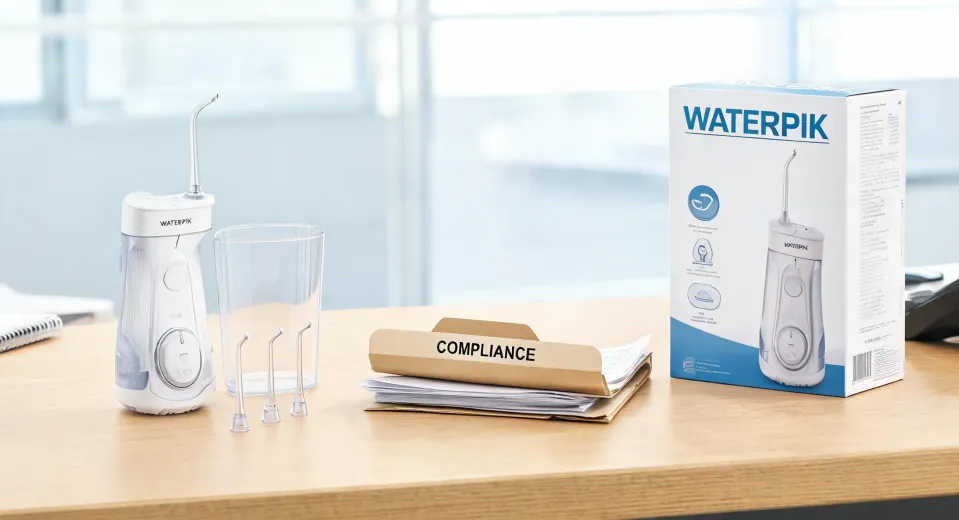
If you're buying for a dental practice and you keep going back and forth between the countertop Waterpik Water Flosser 2.0 and the Waterpik Cordless Advanced water flosser (model 20022493), here is the short answer: default to the countertop unit and stock the cordless as your demo and travel option. If your budget only covers one product line, make it the countertop. If it covers two, the cordless is a useful second, but it is not the one I'd build a practice's home-care retail program around.
The countertop is what patients buy. The cordless is what hygienists like to hold. It took me a year, three rounds of inventory data, and one very honest conversation with our lead hygienist to understand that the difference matters more than pressure settings.
Why I'm the person asking this question
I'm the office administrator for a five-location dental group — 90 employees, 22 hygiene chairs, and roughly $180,000 in annual non-clinical purchasing across 60-plus vendors. I've sat in this seat since 2020, so I've handled the warranty callbacks, the late shipments, and the invoices that make accounting angry. When our operations director put me in charge of consolidating home-care products in 2024, I had a simple goal: fewer SKUs, fewer problems, and no surprises for the clinicians.
Look, I'm not a hygienist and I don't pretend to give clinical advice. But I do see what sells, what comes back, and what sits in a supply closet for eleven months. If you ask me, that's where the real product answer lives.
What these two Waterpiks actually are, in office terms
The Waterpik Water Flosser 2.0 is the full-size countertop model. It has a large water reservoir, ten pressure settings, a dial patients can see, and the general feel of a medical device. It needs counter space and an outlet. The Cordless Advanced — listed in most distributor catalogs as model 20022493 — is the rechargeable handheld: three pressure modes, a smaller tank, and a footprint that fits in a drawer. Both use a pressurized stream of water to remove plaque and debris between teeth, and both carry the Waterpik name that patients already recognize.
The clinical effectiveness isn't the differentiator here. It's how each model behaves in a practice ecosystem.
That ecosystem has three parts. Does the hygienist want to demonstrate it at the chair? Does the patient want to buy it on the way out? And does it create administrative headaches after the sale? Most purchasing conversations stop after part one.
Three things that surprised me once I saw the data
Surprise one: the staff favorite is not the sales leader. Our hygiene team lobbied for cordless units in every consult room, so we bought them. The cordless is genuinely easier to demo: no cord, no heavy base, and easy to carry to the chair. But when we looked at actual sales, patients consistently chose the countertop Waterpik Water Flosser 2.0. They'd see the box, watch the demo, and then point at the full-size unit and say, "I want the real one." The cordless demoed well. The countertop sold itself.
Surprise two: batteries are a quiet cost that countertop units don't have. We kept about 15 cordless units in rotation across the group as demos and loaners. Within the first year, two units developed charging issues. Both were replaced under warranty. Granted, that's not a terrible record for compact rechargeables — but it's not zero. Our countertop units generated zero returns during the same period. When you retail a device with your practice's name behind it, returns and warranty administration land on your desk. Ask your distributor how dead-on-arrival claims are handled before you place a large order, not after.
Surprise three: replacement tips matter more than the unit margin. Most buyers compare the price of the flosser and stop. But the recurring piece — replacement tips — is what keeps patients coming back. Waterpik recommends replacing tips every three to six months, and those tip orders are a steady, high-margin revenue stream that most practices don't plan for. If your distributor doesn't stock the tips for the model you standardize on, your retail program will stall. I'd rather accept a slightly higher unit cost with a dependable tip supply than save a few dollars per flosser and have nothing to reorder.
When I'd honestly tell you to start with the cordless
To be fair, the countertop is not the right answer for every practice. If your operatories have no stable counter space, or you run outreach or mobile hygiene programs, the Cordless Advanced (20022493) should be your primary order. Same if your model is education-first — you recommend a Waterpik and let patients buy wherever they prefer, rather than carrying retail inventory. In that case, a couple of cordless units per location give your team everything they need, and you avoid tying up cash in boxes that collect dust.
I'd also choose the cordless if you're equipping a satellite office where every square foot counts. Rechargeable units store in a drawer, don't require a nearby outlet, and don't break when the cleaning crew knocks them off a shelf. The countertop wins on features and patient trust. The cordless wins on flexibility.
Here's the thing, though — flexibility is not the same as preference. Given the choice, most patients still preferred the larger unit when they were buying for home. The cordless was the one they bought for travel, for the shower, or for a bathroom where the countertop genuinely didn't fit. Those are real use cases. They're just not the majority.
The way I'd order if I were starting over
If a practice asked me today, this is what I'd tell them: order the countertop Waterpik Water Flosser 2.0 as your baseline — at least one per hygiene room that sees periodontal or implant patients — and add one to two Cordless Advanced units per location for education and travel recommendations. Skip the splashy extras, verify the warranty process, and confirm tip availability before you commit to a distributor.
The right model for your practice is the one your hygienists will actually demonstrate, the one your patients will actually buy, and the one your front desk won't dread restocking. In most practices, that's the countertop. But if you run a lean operation with tight space, buy the cordless and don't apologize for it. Both are legitimate Waterpik products. The question isn't which one is better in the abstract — it's which one survives contact with your practice.

Greta Lindholm
Greta Lindholm is a household refrigeration analyst covering French-door, side-by-side, top- and bottom-mount refrigerators, mini fridges, beverage coolers, chest freezers, and upright freezers. She applies IEC 62552 and IEC 60335-2-24 while comparing energy consumption, usable volume, pull-down time, compartment temperature stability, freezing capacity, noise, door-seal leakage, refrigerant charge, and ambient-temperature performance. Her guides help importers, distributors, private-label teams, and appliance engineers select platforms around climate class, storage mix, efficiency labels, cabinet dimensions, service access, shipping density, and warranty exposure.