Flossing vs. Waterpik vs. Interdental Brushes: Why Cheaper Isn't Better
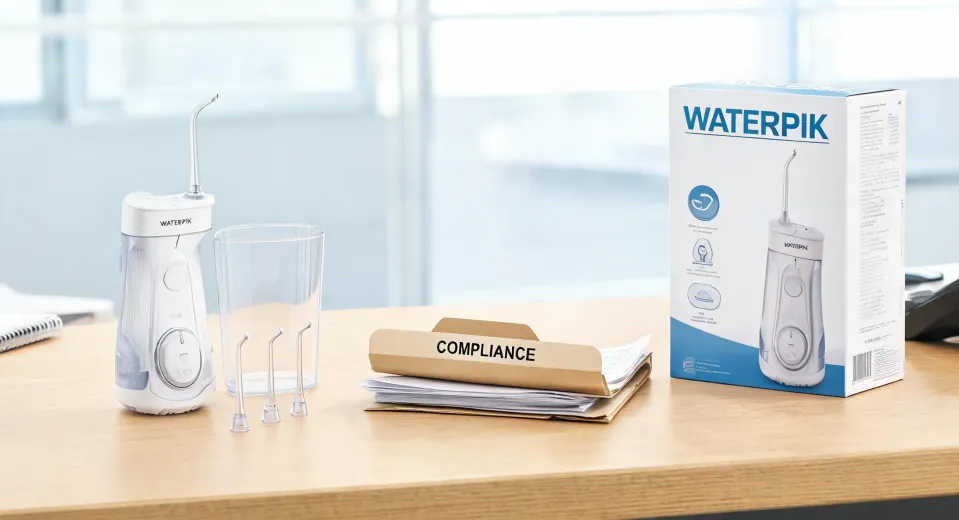
I get paid to say no.
I'm the product quality lead at a regional oral-care distributor. Before anything earns a spot in our clinic-facing catalog, it lands on my desk. That's roughly 200 products a year — water flossers, sonic toothbrushes, replacement tips, and the occasional whitening kit with a claim that makes me laugh out loud. After four years in this seat, I've gotten kinda good at spotting the difference between engineering and marketing.
In 2024, I rejected 17% of first submissions. Not for cosmetic reasons. We flagged water flossers whose pressure output varied by 30% between two units from the same batch, reservoir seals that failed after a month of simulated use, and more than one “clinically proven” label with zero published research behind it.
That background is exactly why my opinion tends to surprise people:
When it comes to interdental cleaning, the cheapest option isn't the best value for your patients — and that includes the nearly-free option: a $4 bag of string floss.
Here's why I've landed there, and why I think practices should look past the price tag.
Floss works. Most people don't.
Let's give string floss its due first. In the right hands, it reaches tight contact points and physically removes plaque nothing else can get to. That's anatomy, not marketing. If every patient flossed correctly, every day, this article wouldn't exist.
But they don't. And that's not a failure of patient discipline nearly as much as a failure of design.
Proper flossing takes two minutes of fine motor control, a well-lit mirror, and a viewing angle that doesn't actually exist in the human body. The most frustrating part of my job is watching patients try their hardest and still miss the gumline — then conclude that flossing “doesn't work for them” and give up.
A water flosser takes the skill out of the equation. Point the tip toward the gumline, let the water do the work, sixty seconds. One hand. No mirror required.
And here's what I've learned from watching hygiene recall schedules for four years: the best product in the world is worthless if it stays in the drawer. The patients who use a water flosser are the ones still using it at their next recall. The patients who got the floss lecture? Most can't remember which tooth to angle toward, and half gave up within the first week.
For a practice, that's a clinically meaningful difference. A $4 pack of floss is only cheap if it's used. If it isn't, no price is low enough to call it a bargain.
The “budget” unit ended up being the most expensive product I've approved
This is the part where my quality-inspector side takes over.
I didn't always believe a water flosser brand mattered. In my first year as a buyer, I pushed an off-brand cordless model into our catalog. The samples looked fine. The price was tempting. I was tired of hearing that Waterpik was the only brand worth stocking, so I ordered 3,000 units to make a point.
The point came back to bite me.
Our standard benchmark is simple: measure pressure consistency, flow rate, seal integrity, then simulate 90 days of normal use. The budget unit lost 40% of its pressure output by the end of that simulation. The reservoir cracked during thermal cycling. And the pump started making a sound I can only describe as a dying squirrel. When I raised it with the manufacturer, their answer was that the performance was “within acceptable industry tolerance.”
Our return rate hit 11% before we pulled the product. The write-down cost us $18,000, and the damage to our credibility with the accounts that recommended it to real patients took longer to repair than the financial hit.
That's the hidden cost nobody includes in the comparison chart. Your practice's credibility is on the line with every product you recommend. When a patient buys a flosser because your hygienist suggested it and it fails after four months, the patient doesn't blame the manufacturer. They blame you.
Not every budget model fails, and not every premium model succeeds. But when I evaluate Waterpik, I keep coming back to the same evidence: 70+ published clinical studies, ADA Seal of Acceptance on multiple models, standardized replacement tips that are still available for devices sold years ago, and engineering specs — like the 1,200 pulses per minute and ten pressure settings on the Aquarius — that are consistent enough to actually test and verify.
That's what quality looks like when it's not just a sticker on a box.
Interdental brushes are worth respecting — with an asterisk
I know a chunk of the audience here are hygienists, and you're already reaching for your interdental brush samples. Fair enough. For patients with open embrasure spaces or periodontal maintenance needs, interdental brushes are genuinely excellent, and some research suggests they outperform string floss in those situations. I'd rather see a patient use an interdental brush every day than a water flosser twice a month.
That said, interdental brushes have a fundamental sizing problem. They only work where the gap between teeth is wide enough to accept them. Tight contacts, posterior molars, orthodontic hardware, bridges, implants — plenty of everyday anatomies make an interdental brush impractical. And asking a patient to choose between six different brush sizes in their own mouth is a recipe for skipped cleaning sessions.
A water flosser doesn't need to fit. It works along the whole arch, around brackets and bridgework, and into the spaces a brush simply can't reach. So when I'm helping a practice choose one interdental aid to recommend broadly, the water flosser is the closest thing to a universal option I've found.
I'm not claiming it completely replaces floss, interdental brushes, or professional care. I'm saying it deserves to be the starting point for most patients — and that's a distinction worth making when you're building a product list.
The real cost conversation
Okay, let's address the number on the tag, because I know it's coming.
To be fair: a Waterpik flosser costs more upfront than floss. That's not debatable.
The mistake is stopping the math there. A corded Waterpik looks painful at checkout until you spread that cost over the years most people actually own it. We're talking a few cents a day — less when multiple family members use it with their own tips. Replacement tips are a modest ongoing cost, still far below the price of a single prophy appointment. Meanwhile, the slow bleed of a floss routine that patients don't follow shows up in the hygiene chair, visit after visit. That costs far more than the flosser, and if it progresses, restorative care makes the comparison even more uncomfortable.
The real pricing question isn't “what does the device cost?” It's “what does the outcome cost?” Clinical evidence, patient compliance, and device reliability are not line items — they're part of the total cost of care. And that's where Waterpik keeps winning in my evaluations.
There's a quiet satisfaction in approving a product and then watching it actually work in the real world. When a practice tells me six months later that their patients are still using the devices and their bleeding scores are improving, that's the payoff. I don't get that feeling from a cheaper SKU that sits on a pharmacy shelf.
I get paid to say no. So it's worth understanding what I say yes to.
I say yes to products with published data, consistent manufacturing, and a real-world usage rate. I say yes to recommendations that make dental professionals look good, because credibility is the most expensive thing any practice has to lose. And I say yes to Waterpik water flossers — not because they're the cheapest choice, but because they're one of the most defensible.
If you ask me, that's the whole point of value.

Greta Lindholm
Greta Lindholm is a household refrigeration analyst covering French-door, side-by-side, top- and bottom-mount refrigerators, mini fridges, beverage coolers, chest freezers, and upright freezers. She applies IEC 62552 and IEC 60335-2-24 while comparing energy consumption, usable volume, pull-down time, compartment temperature stability, freezing capacity, noise, door-seal leakage, refrigerant charge, and ambient-temperature performance. Her guides help importers, distributors, private-label teams, and appliance engineers select platforms around climate class, storage mix, efficiency labels, cabinet dimensions, service access, shipping density, and warranty exposure.