Waterpik Cordless Plus Review and the Waterpik vs Philips Water Flosser Debate: A Dental Buyer’s Perspective
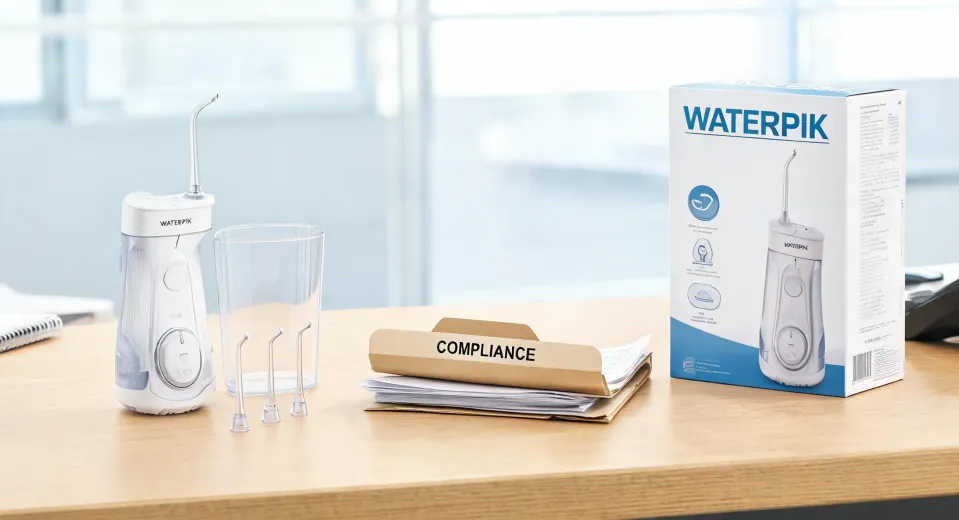
If you’re trying to decide between a Waterpik and a Philips water flosser for your practice, here’s the short version: For most clinical settings, I’d order the Waterpik Cordless Plus. Not because it’s the fanciest unit Waterpik makes. It wins because it’s the one that patients and hygienists will actually use—and in dental practice, compliance beats a spec sheet.
I’m the person who handles emergency equipment orders for dental clinics and suppliers. When a clinic calls at 4 p.m. on a Friday with units needed for Monday morning, I don’t have time for brand marketing. I need products that arrive on time, work out of the box, and stay working after weeks of daily demos. That’s the lens I’m using for this review.
One last-minute order shaped my view
In March 2024, a clinic called about a community health fair scheduled for the next morning. They needed twelve water flossers for patient education and product demos. Normal supplier turnaround was three days. We found a distributor two states away, paid $180 in overnight freight on top of the base cost, and had the units at the clinic by 7 a.m. The fair went ahead. The alternative was an empty table and a wasted marketing opportunity.
That experience matters because it forced me to think about which model I could confidently send out without a test run. Not the one with the most modes. Not the sleekest case. The one that a hygienist can unpack, fill, and demonstrate in under a minute.
Waterpik Cordless Plus review: what works in a real clinic
The Cordless Plus isn’t the most feature-packed model in Waterpik’s lineup. It has two pressure settings and a compact design. If you need a huge reservoir and ten pressure settings, a countertop model like the Aquarius is a better fit. But the cordless form factor fixes a problem I see all the time: there’s no outlet next to the operatory sink.
That’s not a minor detail. A corded flosser requires a hygienist to rearrange the room, find an extension cord, and hope the patient doesn’t pull it off the counter. A unit that fits in a drawer and comes out for every new patient conversation gets used. Two pressure settings are enough for teaching: “Start on low if your gums are sensitive. Move to high if you want a deeper clean.” Patients remember that. They don’t remember ten modes after a six-minute appointment.
The Cordless Plus also uses standard Waterpik tips. That might sound obvious, but for a clinic or distributor, it matters. One unit can support orthodontic tips, periodontal tips, and standard jet tips without creating a frustrating inventory puzzle.
There’s something satisfying about seeing a device close the gap between a clinician’s advice and a patient’s daily routine. One practice told me they used to spend most of their hygiene education time fighting with patients about string floss. Now they show the cordless unit and let patients try it at the sink. The follow-up visits got easier. Not because the water flosser was magic—because it removed a barrier.
From an ordering standpoint, we’ve also had fewer returns on this model than on some fancier units. That’s anecdotal, but it’s based on 200+ units across our accounts. A couple of battery-related issues came back over the years, which is normal for any cordless device. The failure rate was still low enough that we kept it as our default.
Waterpik vs Philips water flosser: an honest answer
Every “Waterpik vs Philips water flosser review” you’ll find starts with a feature table. I want to start with a more useful question: are we comparing a water flosser to an air flosser?
Philips makes strong products in the oral care space, and the Sonicare toothbrush line has earned its reputation. But the Philips AirFloss works differently from a Waterpik cordless flosser. Waterpik uses a thin stream of pulsating water to remove debris and massage the gumline. The AirFloss uses quick bursts of air mixed with tiny water droplets. Both can help with interdental cleaning, but they are not interchangeable.
Here’s the thing: the AirFloss is kinda brilliant for the patient who absolutely won’t use string floss and wants a fast thirty-second routine. But it’s not the same tool as a water flosser, and that difference shows up when a clinician tries to direct a stream into a specific area.
I have mixed feelings about the whole “Waterpik vs. Philips” framing. On one hand, competition makes products better and pricing more reasonable. On the other, the A/B comparison makes dental teams feel like there’s one right device for every patient. There isn’t. A patient who already uses a Philips Sonicare toothbrush might be perfectly happy with an AirFloss. A patient with braces, uneven spacing, or a history of gum disease usually needs something more targeted than air bursts.
Before we standardized on the Cordless Plus, I went back and forth between it and the Philips AirFloss for a satellite clinic. On paper, the AirFloss looked sleeker and less intimidating. But my gut said the hygienists would want a real water stream. Ultimately, we let them try both. They chose the Waterpik because they could feel the difference when they aimed it along the gumline.
Look, Philips is not the enemy. If your patient is the type who will never sit still for a water flosser, an AirFloss might be better than nothing. But if the question is which device to default to for clinical use, I’d still start with the Waterpik.
New tools, same fundamentals
My own recommendation shifted between 2020 and 2025. In 2020, I probably would have chosen the product with an app, more modes, and a premium price. It felt like the future. Then practices started telling me that patients left those devices in drawers because they forgot to charge them or found the interface annoying. The fancy product scored well in a brochure and poorly in real life.
The oral care industry is still evolving. As of early 2025, cordless water flossers have become reliable enough to be a standard recommendation, not just a “nice extra” for periodontal patients. Tip designs are better. Motors are quieter. And patients are more open to alternatives because they’ve seen them in dental offices, not just in late-night ads.
And yes, the clinical angle matters. We check the ADA’s list of accepted products and the manufacturer’s published evidence before we add anything to our standard catalog. You don’t have to take a dental supplier’s word for it; the data on oral irrigators is out there.
But the fundamentals haven’t changed. Removing biofilm along the gumline still matters. Patient compliance still decides outcomes. And no home device replaces professional diagnosis and cleaning. The tools have changed; those principles have not.
When I wouldn’t choose the Cordless Plus
Let me be straightforward about the boundaries of this recommendation.
If a practice wants a dedicated demonstration station with an outlet and sink, a countertop Waterpik like the Aquarius is a better choice. The reservoir is larger, the pressure range is wider, and you don’t have to worry about battery level for a six-hour event.
If a patient is specifically looking for a tiny travel option, there are smaller cordless designs built for that purpose. The Cordless Plus is portable, but it’s not the smallest model in the category.
If a patient needs a special therapeutic tip for post-surgical recovery, confirm that the model you order is compatible with that tip. Most Waterpik models are, but it’s worth checking before you place a bulk order.
And to be clear: I’m not anti-string-floss. Manual floss, when done correctly, is an effective and inexpensive way to clean between teeth. The problem is that many patients don’t do it correctly or consistently. A water flosser is a useful addition to a home care routine, not a substitute for professional cleaning or an appropriate treatment plan.
The bottom line
Choose the tool that gets used. For most clinics, that means the Waterpik Cordless Plus. For a smaller group of patients, the Philips AirFloss will make more sense. But as someone who buys these products under deadline pressure, I care less about brand allegiance and more about whether the device ends up on the bathroom counter. The Cordless Plus still wins that test.

Greta Lindholm
Greta Lindholm is a household refrigeration analyst covering French-door, side-by-side, top- and bottom-mount refrigerators, mini fridges, beverage coolers, chest freezers, and upright freezers. She applies IEC 62552 and IEC 60335-2-24 while comparing energy consumption, usable volume, pull-down time, compartment temperature stability, freezing capacity, noise, door-seal leakage, refrigerant charge, and ambient-temperature performance. Her guides help importers, distributors, private-label teams, and appliance engineers select platforms around climate class, storage mix, efficiency labels, cabinet dimensions, service access, shipping density, and warranty exposure.