Waterpik Water Flosser Ultra Reviews FAQ: A Dental Office Buyer’s Perspective
-
Are Waterpik Water Flosser Ultra Reviews Accurate?
-
What’s the Best Electric Toothbrush With a Waterpik?
-
Do Dentists Actually Recommend Waterpik, or Is It Just Marketing?
-
Which Waterpik Models Should a Dental Practice Stock First?
-
Which Waterpik Replacement Tips Are Worth Stocking?
-
How Long Do Waterpik Units Last, and What Happens When One Fails?
-
When Is a Waterpik Not the Right Recommendation?
I’m not a dentist or hygienist, so let’s get that out of the way. I’m the office administrator for a three-location dental group, handling purchasing since 2021. In practical terms, that’s about 60 vendor orders a year—including every Waterpik unit we stock and sell. This FAQ is built from the questions our front desk, hygienists, and dental supply reps ask most. I’ll answer them straight, even if that sometimes means saying a Waterpik isn’t the right recommendation for someone.
Are Waterpik Water Flosser Ultra Reviews Accurate?
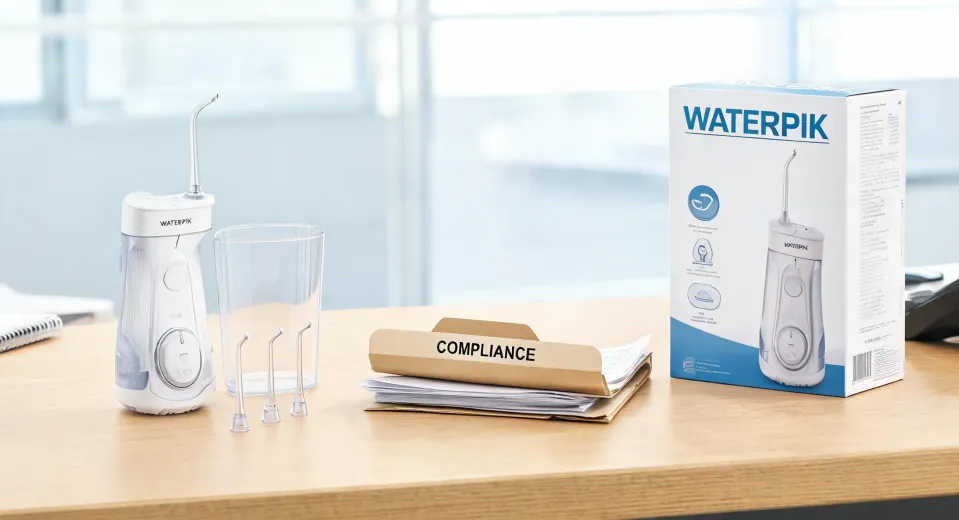
Mostly, yes—and our experience tracks with the online ratings. We made the countertop Ultra our baseline Waterpik in early 2023 because it’s simple to demo and patients figure it out quickly. During follow-up calls, patients say things like “I actually use it,” which is more than I can say for string-floss lectures alone. When I read reviews as a buyer, I look for repeated complaints about leaking, weak pressure, or failed motors. On the Ultra, those show up rarely.
The caveat is the miracle language. A water flosser won’t remove calculus, won’t reverse periodontitis, and isn’t a replacement for professional cleanings. It’s a home-care tool. A genuinely effective one when used nightly, but still a home-care tool.
What’s the Best Electric Toothbrush With a Waterpik?
This question means two different things, and the answer changes. If a patient wants one single handle that does both brushing and water flossing, we stock the Sonic-Fusion 2.0. It solves the “I’ll do it later” problem, because there’s no second device to forget. It isn’t cheap, but some patients need that convenience.
If they already own a countertop Waterpik and want the best electric toothbrush to use alongside it, the honest answer is less exciting: any electric toothbrush they’ll actually use. Water flossing works independently of toothbrush brand, so matching brands isn’t necessary. Pick a brush they don’t resent charging and let the habit do the work.
Do Dentists Actually Recommend Waterpik, or Is It Just Marketing?
I understand why people ask. A product sold at the front desk feels like a profit play. But dental practices make very little on retail oral care. We carry Waterpik because our clinicians kept saying water flossing gets better patient compliance than string floss—and compliance is what reduces bleeding at re-care visits.
I’m not the right person to interpret raw trial data. What I can tell you from the buyer’s seat is that the evidence isn’t hidden. Waterpik’s original oral irrigator goes back to the 1960s, several models carry the ADA Seal of Acceptance, and a 2005 randomized trial by Barnes et al. in the Journal of Clinical Dentistry found brushing plus water flossing reduced gum bleeding more than brushing plus string floss in the group studied.
One honest caveat: much of the published research on oral irrigators has been funded by the manufacturer. That doesn’t make it worthless, but it’s worth knowing. If you’re a dentist, you already know how to weigh it. If you’re a patient, ask your hygienist what they see at hygiene recalls. That’s how our team formed its opinion.
Which Waterpik Models Should a Dental Practice Stock First?
Start with a small range. We carry a countertop model—the Ultra—as our baseline, one cordless model for patients who travel or have tiny bathrooms, and the Sonic-Fusion for patients who want a single device. That’s it. You don’t need four SKUs to look professional. You need products your hygienists are comfortable recommending and willing to demo.
If you’re building inventory from zero, begin with six to ten countertop units and reorder based on actual requests. You’ll likely pay less per unit through an authorized dental distributor, but get a written quote first. Pricing moves. In 2023, we accepted a substitute model from a distributor to save about $14 per unit. Three of the first fifteen units failed within six months. We switched back, paid restocking, and lost most of the “savings.” Now I pay for reliability and keep the invoices.
Which Waterpik Replacement Tips Are Worth Stocking?
The tip that comes in the box is the Classic Jet Tip, and for most patients it’s enough. The second tip I’d stock is the Plaque Seeker because its bristle reaches closer to the gumline—patients feel the difference immediately. If your practice treats orthodontic patients, add the orthodontic tip. If you do periodontal maintenance, the Pik Pocket tip is worth having for patients who need to deliver rinse into deeper pockets.
Don’t go overboard on inventory. Start with a small supply of Classic Jet and Plaque Seeker tips, then order the specialized ones based on what your own patient list actually needs. Tips disappear quickly, so keep them behind the front desk rather than in an open drawer.
How Long Do Waterpik Units Last, and What Happens When One Fails?
This is the question I wish I had asked before my first order. A small appliance that lives in a damp bathroom is going to fail occasionally. Since 2021, our Waterpik failures have been rare, but they exist. One patient’s Ultra stopped pressurizing at month 14. We emailed the model number and original receipt to Waterpik support, and a replacement arrived in about a week.
Most countertop models carry a three-year limited warranty as of this writing, but check the current packaging because terms change. The practical lesson for office managers is to keep invoices and record the model label before the device goes home. You can’t make a warranty claim with a receipt that doesn’t exist.
When Is a Waterpik Not the Right Recommendation?
I’ll probably annoy a pure product seller here, but honesty matters more. First, if a patient won’t use it nightly, don’t send them home with any tool. The $59 sale isn’t worth the broken promise. Second, if a patient has active periodontal disease and needs scaling or root planing, a water flosser doesn’t address that—use it after treatment, not instead of it.
Third, if a patient already flosses with string and has healthy tissue, don’t fix what isn’t broken. String floss works when used properly. Our front desk learned to ask one question before recommending a Waterpik: “Do you see yourself using this every day?” If the answer isn’t yes, we don’t sell it. We’d rather lose one retail sale than become the office that sold a $90 appliance that sits in a bathroom drawer.

Greta Lindholm
Greta Lindholm is a household refrigeration analyst covering French-door, side-by-side, top- and bottom-mount refrigerators, mini fridges, beverage coolers, chest freezers, and upright freezers. She applies IEC 62552 and IEC 60335-2-24 while comparing energy consumption, usable volume, pull-down time, compartment temperature stability, freezing capacity, noise, door-seal leakage, refrigerant charge, and ambient-temperature performance. Her guides help importers, distributors, private-label teams, and appliance engineers select platforms around climate class, storage mix, efficiency labels, cabinet dimensions, service access, shipping density, and warranty exposure.