Waterpik Ultra Plus and Cordless Select Water Flosser Combo Pack: Questions From a Quality Inspector
-
What is the Waterpik Ultra Plus and Cordless Select Water Flosser Combo Pack?
-
Do the Ultra Plus and Cordless Select use the same replacement heads?
-
Which Waterpik water flosser head should a clinic stock?
-
Are generic replacement heads good enough?
-
How can I tell if I'm getting genuine Waterpik replacement heads?
-
What should I inspect when a Waterpik order arrives?
I'm a quality inspector at a dental supply distributor. I review Waterpik products before they go to clinics—roughly 1,200 units a year. In 2024, about 3% of inbound Waterpik orders were rejected for damaged seals, model mismatches, or missing lot traceability. These are the questions I get asked most often, plus the one I wish more buyers asked.
- What's actually in the Waterpik Ultra Plus and Cordless Select Water Flosser Combo Pack?
- Are the replacement heads interchangeable between the two units?
- Which Waterpik water flosser head should a clinic carry?
- Are generic replacement tips good enough?
- How can I tell if I'm getting genuine Waterpik heads?
- What should I inspect when a Waterpik order arrives?
What is the Waterpik Ultra Plus and Cordless Select Water Flosser Combo Pack?
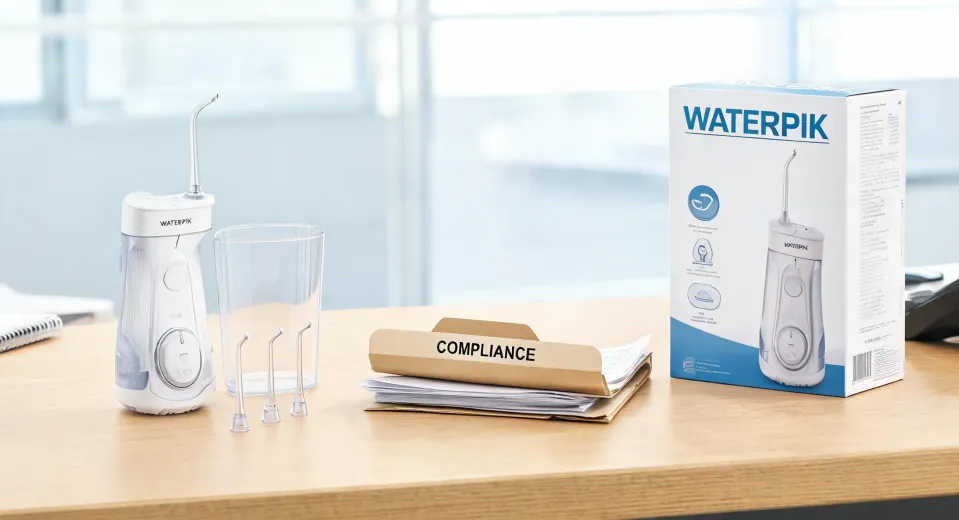
The Waterpik Ultra Plus and Cordless Select Water Flosser Combo Pack includes a corded countertop unit and a rechargeable cordless unit. The Ultra Plus is the station model for a treatment room. The Cordless Select is the one you can take room to room, offer for patient home use, or hand to a hygienist during education.
The combo works as a procurement solution if your practice actually uses both formats. It gives you one SKU instead of two, which lowers the administrative cost of the order. But the bundle is only a good value when both units will be used. I've watched buyers pick the combo because it cost less than two separate units, then store the cordless model in a drawer for a year. That's not a saving; it's an unused asset.
Do the Ultra Plus and Cordless Select use the same replacement heads?
Yes for standard jet tips. Most Waterpik water flosser tips use the same click-lock mechanism, so the Waterpik water flosser head that fits the Ultra Plus also fits the Cordless Select. That's useful if you want to keep one inventory for multiple devices.
That said, I'd still check the tip packaging for the compatibility mark. Specialty tips are designed for specific clinical situations, and the shape of the tip does the work, not just the attachment ring. What I mean is: don't buy a complete inventory for each device model. But if your practice treats lots of orthodontic patients, stock a dedicated orthodontic Waterpik tip rather than handing them a standard jet tip.
Which Waterpik water flosser head should a clinic stock?
Start with the standard jet tip. If you work with braces, stock an orthodontic Waterpik tip. If you treat periodontal patients, add the pocket tip and the plaque seeker tip. One Waterpik water flosser head type can be inventoried in bulk while specialty tips are ordered in smaller volumes.
I wouldn't stock every tip on day one. Let your patient chart tell you what you need. The standard tip covers the majority of use, and the replacement schedule is every three to six months.
Are generic replacement heads good enough?
This is where my answer surprises people. Let me explain.
Generic heads look identical in the package. Some are fine. But I've tested aftermarket tips with a visible seam line that interfered with the water channel, and others with locking collars that didn't seat fully. The first click felt okay. After a few weeks of use, the tip worked loose and water sprayed near the gumline.
The upside of a generic tip is saving one to two dollars per piece. The risk is a tip that leaks mid-appointment or a patient who goes home wondering why the device doesn't feel as solid as the one in your office. I kept asking myself if that saving was worth the potential complaint. It isn't.
Let me rephrase that: the real cost of a generic tip includes the time your team spends troubleshooting, the leak mess, and the lost confidence in the product. A genuine Waterpik water flosser head removes that variable.
How can I tell if I'm getting genuine Waterpik replacement heads?
Buy from an authorized distributor first. If you're buying online from an unknown reseller, ask for batch traceability or lot numbers before you put them in your cart.
When you inspect the physical tip, check the seam. A genuine part has a clean mold line with no flashing. The imprint should be legible and not slightly rotated. Press the tip on the handle; it should snap with a clear click. If the tip can wiggle after locking, it's not acceptable.
For the devices themselves, look for third-party validation. The ADA Seal of Acceptance is one example of an independent review that checks safety and effectiveness claims.
What should I inspect when a Waterpik order arrives?
The box label isn't enough. I recommend a simple incoming check before any unit goes into patient rotation:
- Match the model number on the unit, not the outer carton, to the purchase order.
- Test one tip from each box and listen for the click.
- Power on the corded unit and check the indicators.
- Charge the cordless unit long enough to run a short water cycle.
- Photograph or scan the lot information for traceability.
We didn't have a formal receiving inspection years ago, and it cost us. A batch of cordless devices charged fine initially, but drained too fast after a week on a shelf. The batch wasn't caught until a unit died during a patient demo. After that, our standard procedure changed. Now every contract includes lot-level sample testing.
In my view, the lowest price on a Waterpik order isn't the actual cost. The total cost includes inspection, potential downtime, and the risk of a poor patient experience. That last one is impossible to see on the invoice.

Greta Lindholm
Greta Lindholm is a household refrigeration analyst covering French-door, side-by-side, top- and bottom-mount refrigerators, mini fridges, beverage coolers, chest freezers, and upright freezers. She applies IEC 62552 and IEC 60335-2-24 while comparing energy consumption, usable volume, pull-down time, compartment temperature stability, freezing capacity, noise, door-seal leakage, refrigerant charge, and ambient-temperature performance. Her guides help importers, distributors, private-label teams, and appliance engineers select platforms around climate class, storage mix, efficiency labels, cabinet dimensions, service access, shipping density, and warranty exposure.