When "Cheap Enough" Costs You More: Why Dental Clinics Keep Paying for Waterpik's Premium
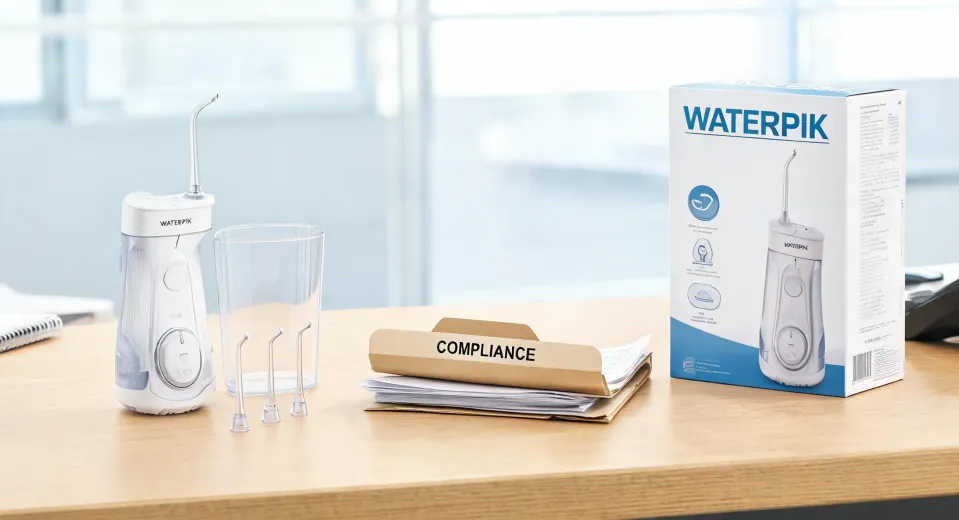
-
I thought I was being smart. Then a clinician showed me why I wasn't.
-
The surface problem: You're overpaying for water flossing
-
The deeper reason: Clinical evidence is expensive to build
-
The cost of ignoring it: Not just money, but reputation
-
The solution (short version): Build certainty into your specs
I thought I was being smart. Then a clinician showed me why I wasn't.
Not long ago, I was running the procurement for a small chain of dental clinics. We were ordering supplies, and one of the line items was a batch of oral irrigators for our hygiene stations. The budget was tight. The clinic manager, a guy I'd worked with for two years, sent me a link to a cordless water flosser that was $40 cheaper per unit than the Waterpik we'd been using. It looked fine. Same basic design. Same claims: "removes plaque," "improves gum health." I approved the order.
Three months later, we had five warranty claims on that batch. The units started losing pressure after about six weeks. One had a battery that wouldn't hold a charge. Another started leaking from the handle. We ended up replacing all twelve of them with Waterpik units anyway. The savings we thought we scored? Gone. And we'd spent extra time managing the complaints and the returns.
That was my trigger event. I didn't fully understand the value of a brand with clinical evidence backing until I saw the cost of trying to bypass it. It took me about a year and a dozen similar experiences across different product categories to see the pattern clearly.
The surface problem: You're overpaying for water flossing
I get it. You're looking at the price tags. A Waterpik Aquarius WP-660 runs around $60 on a good day. A no-name cordless model might be $25. That's a big gap when you're outfitting ten operatories or a whole clinic. The first reaction is almost always: "I can get something similar for less."
That's the surface problem. It's the one we all see first. The real issue isn't the price spread. It's what you're not seeing inside those cheaper units.
The deeper reason: Clinical evidence is expensive to build
This is the part I missed for too long. Waterpik's product line, especially the rechargeable water flossers and the Aquarius series, isn't just engineering. It's the result of clinical studies. There are peer-reviewed papers on the effectiveness of their irrigation technology—studies showing a 51% reduction in gingivitis versus brushing and flossing alone, for example. That data costs millions to generate. It requires trials, statistical analysis, FDA clearances in some cases.
When you buy a knockoff, you're not paying for any of that. The cheap model's claim that it "removes plaque" is a marketing statement. The Waterpik claim is a clinical assertion backed by published research. I'm not a dentist or a clinical researcher, so I can't speak to the rigor of every single study. What I can tell you from a procurement perspective is that a claim with a citation behind it has a fundamentally different risk profile.
Garlanded, but the difference isn't theoretical. If a cheap unit fails—and it will, more often than you'd think—you've wasted your budget. If a Waterpik unit fails, it's a warranty claim against a company that's been in the oral care space for over six decades. The risk is lower. The certainty is higher.
The cost of ignoring it: Not just money, but reputation
The downside of going cheap in a dental clinic isn't just a few wasted dollars. It's the inconvenience to your patients when a device stops working mid-cleaning. It's the time your hygienist wastes trying to troubleshoot a unit that shouldn't have failed. It's the subtle erosion of trust when patients see equipment that looks, feels, or performs like it was bought at a discount store.
To be fair, not every clinic will have a catastrophic failure. The worst case is probably a gradual decline in performance that goes unnoticed until a patient complains. The best case is you save $40 per unit and everything works fine. But I've seen enough procurement decisions go sideways to know that the worst case, while less likely, can be disproportionately damaging. Missing a single deadline on a patient's care plan isn't the same as losing a $15,000 event, but the principle is identical: the cost of failure far outweighs the savings.
Granted, you can find cheaper units that work well for a while. My point isn't that every alternative is garbage. It's that when you're making a bulk purchase for a professional setting, the base layer of protection—a brand with decades of use, published research, and a dedicated customer service line—is not a luxury. It's a form of insurance.
The solution (short version): Build certainty into your specs
Here's what I've come to believe after about five years of managing dental clinic procurement: specify based on evidence, not price. For water flossers, that means listing the required clinical data, the warranty terms, and the expected lifespan of the device. If a supplier can't show you the research or the track record, that's a red flag.
The Waterpik Aquarius WP-660 and the cordless models have a history of reliability that's been tested in real clinics, not just on YouTube. When we switched back to specifying Waterpik as the only acceptable option for oral irrigators, our warranty claims dropped to nearly zero. The upfront cost was higher. The total cost of ownership was lower. Simple.
I'm not saying you should never consider a cheaper alternative. But I am saying that in a clinical environment, the "maybe it'll work" approach is a gamble with your patients' experience and your practice's reputation. Pay the premium for certainty. You'll probably save money in the long run.

Greta Lindholm
Greta Lindholm is a household refrigeration analyst covering French-door, side-by-side, top- and bottom-mount refrigerators, mini fridges, beverage coolers, chest freezers, and upright freezers. She applies IEC 62552 and IEC 60335-2-24 while comparing energy consumption, usable volume, pull-down time, compartment temperature stability, freezing capacity, noise, door-seal leakage, refrigerant charge, and ambient-temperature performance. Her guides help importers, distributors, private-label teams, and appliance engineers select platforms around climate class, storage mix, efficiency labels, cabinet dimensions, service access, shipping density, and warranty exposure.