Why We Rejected 500 'Compatible' Waterpik Replacement Tips
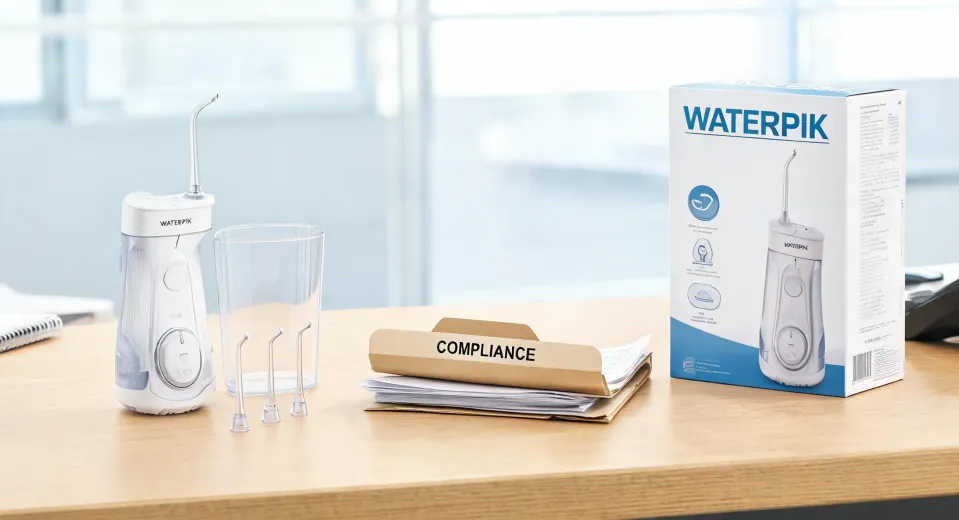
The Batch We Sent Back
In March 2024, our warehouse received 500 replacement tips labeled "compatible with Waterpik water flossers." The unit price came in roughly 40% lower than what we pay for genuine Waterpik replacement parts. Our procurement team had been looking for a lower-cost alternative for months, so this batch was meant to be the test case.
I pulled 27 units from the batch for our standard incoming inspection. Twenty-three failed.
I'm a quality and compliance manager at a dental supply distributor. I review every product batch before it reaches clinics—roughly 150 to 200 unique product lines a year, depending on how you count accessories. I've rejected about 9% of first deliveries in 2024, mostly for labeling or packaging deviations. Full functional rejections are rare. This was one of them.
I'll be straight with you: the projected savings—around $450 on that order, closer to $1,800 if we'd switched suppliers for the full year—weren't worth the headaches that followed.
Why "Compatible" Parts Look So Attractive
I get the appeal. Put a genuine Waterpik Aquarius Water Flosser tip next to a generic one and you'll struggle to tell them apart. Both are small plastic nozzles with a clip ring. Both click into the handle. Both spray water when the unit is on. So why pay nearly double for the branded version?
That logic makes sense until you understand what the tip actually does. It's not just a straw for water. It's the final precision component in a device designed to deliver a pulsating stream at a specific pressure and angle. The orifice diameter controls the stream pressure at the exit point. The internal geometry shapes the pulse. The angle determines whether the water reaches the gum pocket or just bounces off the tooth. And the locking collar has to hold the tip in place through months of daily clipping in and out.
What most people don't realize is that "compatible" part manufacturers rarely have access to the original engineering specification. They buy a genuine tip, scan it, and reverse-engineer what they can measure. But not everything that matters is visible on a scan. Internal tolerances, material properties, and wear characteristics don't show up in a 3D model.
What the Tests Found
We ran three checks on the batch: orifice diameter, stream angle, and lock-cycle durability. The results explained exactly why the spec matters.
The orifice diameter deviated by up to 0.2 mm from the genuine part spec. Doesn't sound like a lot. But it's enough to change a focused pulse into a diffused spray. A patient with periodontal pockets who needs water delivered below the gumline won't get it.
Several tips produced visibly inconsistent stream angles. The water stream is engineered to hit the gumline at a flush angle. When it's off by even a few degrees, the water rolls off the tooth surface—your patient thinks they're cleaning between their teeth, but they're just rinsing the outside of the enamel.
The lock-cycle test is where things got serious. We clip and unclip tips from a handle repeatedly to simulate normal use over several months. One of the generic tips cracked at the base of its locking collar after roughly 200 cycles. That's about three months of daily use. A tip that cracks inside the handle during normal operation is a safety issue, not just a performance issue.
That single cracked tip would have justified rejecting the batch. But what troubled me more was the documentation—or rather, the lack of it.
The Invisible Problem: Material Traceability
Let me get one thing out of the way: I'm not claiming every third-party replacement tip is bad. Some alternate manufacturers document their materials thoroughly and build to tight tolerances. If you can verify that, buy with confidence.
But the batch we received came with a material certificate that read "engineering plastic." No polymer grade. No supplier name. No test report. When we asked the vendor for specifics, they couldn't provide them.
Compare that with what arrives with genuine Waterpik tips. Material documentation, traceable sourcing, safety compliance data. You can ask and actually get a meaningful answer. I should mention that when I requested material data from Waterpik's support team during a vendor qualification review in 2023, they provided it within two days. That's the level of documentation that should exist for anything that goes into a patient's mouth.
The upside was $1,800 in annual savings. The risk was harder to quantify—but the cracked tip gave me a number I couldn't ignore.
When two products look identical but one can document every material and tolerance while the other can only offer "engineering plastic," the cheaper one isn't cheaper. It's risk that hasn't been priced in yet.
The Real Cost of Saving a Few Dollars
Here's what actually happens when cheap parts go wrong in a clinical environment.
Many of the dental clinics we work with recommend Waterpik devices as part of patient education. They demonstrate the technique, answer questions, and follow up at the next appointment. Their recommendations are based on clinical evidence—research Waterpik has published over the years and makes available at waterpik.com. That evidence was produced with genuine tips and precisely controlled dimensions.
When a patient uses a tip that wasn't part of the original clinical evaluation, they're no longer using the device that the research validated. Maybe it works exactly the same. Maybe it's 30% less effective. You don't know. And in a healthcare setting, "you don't know" is a lousy position to be in.
There's also a trust dimension. A dentist who recommends a specific product is putting their name behind it. If the patient has a bad experience because of a knock-off part, they don't blame the part. They blame the dentist's recommendation. They stop water flossing entirely. The whole educational effort—chairside time, demonstrations, take-home instructions—goes down the drain over $8 worth of savings.
And then there's the operational failure mode, which is less about medicine and more about logistics.
A practice manager we work with called us in a panic last fall. She'd found a deal on generic heads for the Waterpik shower heads her clinic uses in post-procedure rooms. When the parts arrived, they didn't fit. The thread spacing was different from her existing shower arms, and the vendor was unresponsive for days.
She had patients scheduled the following Monday and no way to offer them the warm-water rinse her team had been providing after certain procedures.
We shipped genuine Waterpik shower head replacement parts on Tuesday. They arrived Thursday. She paid about twice what the generic shipment had cost, but the price difference was never the question. Functioning equipment before Monday morning was the question. It's not about paying more. It's about certain delivery from a vendor who stands behind the spec.
In quality work, we've learned to put a dollar value on certainty. A part that arrives on time, fits the handle, and performs to spec removes a whole category of risk that the invoice price doesn't capture.
How We Handle It Now
Since that March rejection, we've standardized on genuine Waterpik parts for the Aquarius units we supply to clinics. Not because there aren't alternatives, but because the information gap is usually too wide to make an informed choice.
If you're a buyer making this decision, here's my advice. Before buying any non-genuine replacement tip for a Waterpik water flosser, ask the vendor for the material datasheet, dimensional tolerance report, and documentation of independent testing. If they can provide that in writing, it's worth considering their product. If they can't, save yourself the trouble and buy the genuine part.
The few dollars you save per unit are the same few dollars that someone removed from a material spec, a testing report, or a supplier audit. In oral care, that's not a corner I'll cut.

Greta Lindholm
Greta Lindholm is a household refrigeration analyst covering French-door, side-by-side, top- and bottom-mount refrigerators, mini fridges, beverage coolers, chest freezers, and upright freezers. She applies IEC 62552 and IEC 60335-2-24 while comparing energy consumption, usable volume, pull-down time, compartment temperature stability, freezing capacity, noise, door-seal leakage, refrigerant charge, and ambient-temperature performance. Her guides help importers, distributors, private-label teams, and appliance engineers select platforms around climate class, storage mix, efficiency labels, cabinet dimensions, service access, shipping density, and warranty exposure.