I bought 12 Waterpik water flossers for our clinic. Here’s what I learned the hard way.
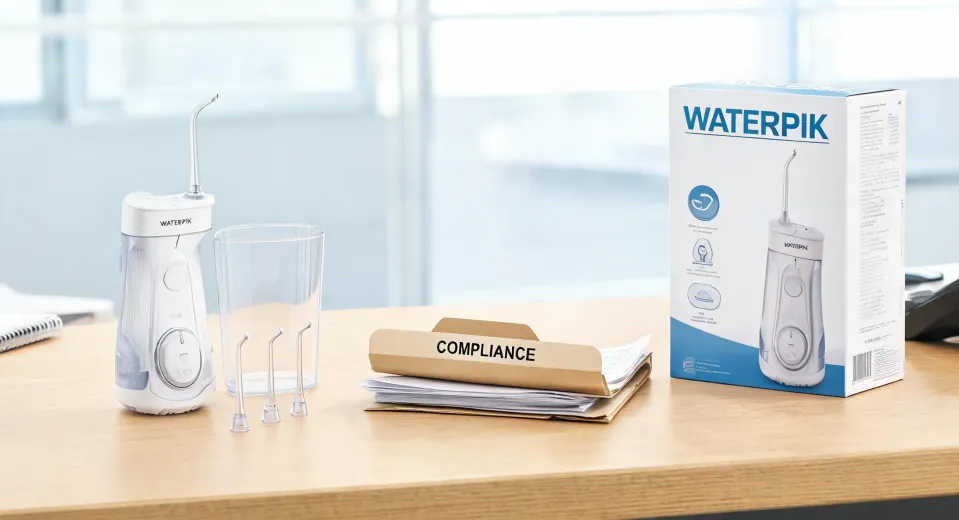
How a simple product swap turned into a $3,200 mistake
I'm the office manager at a mid-sized dental practice in Chicago. I've been handling our supply orders for about four years now. Last January (2024), we decided to switch our post-procedure recommendation from traditional floss to a water flosser. Waterpik was the obvious choice—clinical studies, professional trust, all that. I figured I'd order a few units for the clinic to test, plus a stock of replacement tips for patients.
What I didn't expect was to waste nearly $3,200 on the wrong equipment and spend three weeks untangling the mess. Here's what happened, and what I wish I'd known before I hit 'order.'
The rookie mistake: picking the wrong model
I started with the Waterpik Aquarius—the countertop model everyone knows. But for our clinic rooms, where space is tight and patients are seated, the corded countertop setup was a nightmare. The cord wasn't long enough for the setup we had. Plugs were behind equipment carts. We spent the first week just moving things around, and the cord still got in the way.
Then I ordered the Waterpik Ion cordless countertop model. That was a step up. The cordless design meant we could place it anywhere, and the magnetic charging arm was clever (though I'll get to that in a second). But the real issue wasn't the model—it was that I didn't test the setup with our actual workflow before ordering 12 of them.
Side note: The Ion model's charging arm? I assumed it worked like a standard charging base. I was wrong. You have to position the unit just right on the arm, and if a patient bumps it (which happens constantly), it stops charging. We discovered this the hard way when three units ran out of battery mid-afternoon during a busy Friday. That cost us a 1-week delay while I sourced backups.
The instructions problem
Here's where things got expensive. The Waterpik water flosser instructions are fine for home use, but for a clinic? They're too detailed and not practical. Patients would sit down, look at the manual, and immediately get confused about which tip to use, how to fill the reservoir, and what pressure setting to start with.
I once ordered 50 replacement tip sets (the Classic Jet Tips, CT-100s) in bulk, assuming the standard ones were what we needed. The packaging looked right. I checked it myself. But when we opened the first box for a patient instruction session, the tips didn't fit our units because we were using the Professional series, which uses a different locking mechanism. $890 worth of tips, straight to the trash because they were unreturnable. The error took 5 days to resolve—we had to expedite the correct tips at a 45% premium.
What I learned about 'one-size-fits-all'
"The vendor who said 'this isn't our strength—here's who does it better' earned my trust for everything else."
This is the lesson that stuck. When I called Waterpik's B2B support, the rep told me flat out: "Our consumer models work fine for clinics, but if you're doing high-volume patient demos, the Professional series is built for that. We can set you up with a rep who specializes in clinical installations."
That was the turning point. I'd assumed Waterpik was a single product line. It isn't. Their consumer stuff (Aquarius, Ion, Cordless Advanced) is great for individual use. Their Professional series is designed for clinics—different tip compatibility, higher duty cycle, longer warranties. I'd been burning money on consumer-grade gear for a pro environment.
The ceiling fan connection (yes, really)
Here's a weird detail: in our clinic's staff area, there's a ceiling fan that we always ran clockwise. I mentioned this to the Waterpik rep, half-joking that it was a problem because the breeze was drying out the reservoirs. He laughed and said, "Well, you know which way the ceiling fan goes in the summer? Counterclockwise to create a direct breeze. Clockwise in winter to recirculate heat." Not directly relevant, but it reminded me that assumptions about how things work can backfire.
I had assumed the pressure settings on the consumer models would be fine for patient demos. They're not. The Standard model maxes out at 70 PSI. The Professional series goes to 90 PSI, which is the clinical standard for dislodging plaque in interdental spaces. My mistake cost us time and effectiveness.
The real cost: time and trust
Adding it all up: the wrong tips ($890), the expedited shipping for replacement units ($220), the staff time spent re-training on the different models (roughly $1,500 in lost productivity), and the 1-week delay in getting the correct setup. Total: about $3,200. But the bigger hit was credibility—our team lost trust in my equipment decisions. I had to personally oversee the re-training for the next two months to rebuild it.
What I'd do differently
- Test one unit before ordering bulk. I ordered 12 based on a recommendation. One unit, tested for a week in our workflow, would have caught the cord issue and the tip compatibility problem.
- Verify the model's clinical compatibility. Not all Waterpik models use the same tips. The Professional series has a different reservoir and tip lock. Check the product specifications—it's in the manual, but no one reads it until it's too late.
- Set up a printed instruction guide for patients. Instead of handing them the factory manual, I created a one-page checklist: "Step 1: Fill to line. Step 2: Select pressure. Step 3: Aim at gum line." This reduced instruction time from 10 minutes to 3.
- Buy the right tool for the job. If you're using water flossers for clinical demos, get the Professional series. It's built for the volume and durability. The consumer models are fine for home use, but they'll break or underperform under clinic pressure.
Final thought
If I could go back to January 2024, I'd spend 30 minutes reading the actual spec sheet and calling Waterpik's B2B line before placing the order. The mistake wasn't buying Waterpik—it was buying the wrong Waterpik for the job. The company itself has excellent clinical data, and their equipment works well when matched to the use case. I just learned the hard way that "Waterpik" isn't one product—it's a family of products, each with a specific purpose.
Pricing note: The figures above are based on publicly listed prices for bulk orders from Waterpik's B2B portal as of April 2025. Prices may vary by region and current promotions. Always verify current rates.

Greta Lindholm
Greta Lindholm is a household refrigeration analyst covering French-door, side-by-side, top- and bottom-mount refrigerators, mini fridges, beverage coolers, chest freezers, and upright freezers. She applies IEC 62552 and IEC 60335-2-24 while comparing energy consumption, usable volume, pull-down time, compartment temperature stability, freezing capacity, noise, door-seal leakage, refrigerant charge, and ambient-temperature performance. Her guides help importers, distributors, private-label teams, and appliance engineers select platforms around climate class, storage mix, efficiency labels, cabinet dimensions, service access, shipping density, and warranty exposure.