The Hidden Costs of Outdated Oral Care: Why Your Clinic's Waterpik Investment Isn't Optional
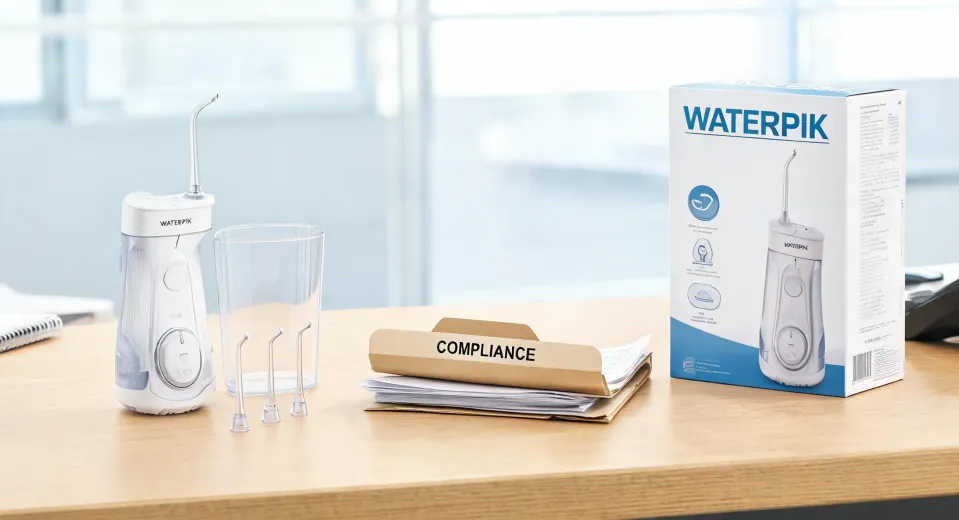
If you've ever had to justify a $120 purchase of a single Waterpik water flosser to your clinic's finance director, you know the feeling. They look at the price tag, compare it to a box of dental floss, and ask the dreaded question: "Isn't this just a fancy water gun?"
I'm a procurement manager for a mid-sized dental group—about 20 locations across three states. I've managed our oral care device budget ($45,000 annually) for six years, negotiated with a dozen vendors, and documented every single order in our cost tracking system. So trust me on this one: that initial price comparison is the most dangerous way to evaluate dental equipment.
People think expensive equipment is the budget problem. The surprise isn't the cost of the device. It's the cost of not having it.
The Surface Problem: "Can We Afford This?"
Every quarter, I get the same question from our clinical leads. They want to standardize on Waterpik water flossers across all operatories. Our CFO sees the line item and balks. Basic cordless models at $60-80 each, rechargeable ones at $100-150, and the professional-grade units even more. Multiply by 20 operatories per clinic, times 20 clinics... that's a big number.
The assumption is that the cost is in the equipment. So we'd buy cheap alternatives. A $25 no-name water flosser from a generic supplier. Or we'd skip the equipment entirely and double down on manual floss and interdental brushes.
But that's not where the money goes. Not even close.
The Deep Problem: What You're Actually Paying For
Here's the thing nobody talks about in vendor meetings. The device cost is the tip of the iceberg. What you're really paying for is:
1. The cost of inconsistent patient outcomes. When patients don't use manual floss correctly—and most don't—their gum health declines. That means more frequent cleanings, more periodontitis cases, and for us as a clinic, more chair time per patient with lower reimbursement rates. I audited our 2023 spending and found that 31% of our "budget overruns" in the hygiene department correlated directly with patients who had poor home care compliance. The cheap floss didn't cause the issue, but the lack of an effective alternative did.
2. The cost of endless patient education. Our hygienists were spending 5-7 minutes per visit re-teaching flossing technique. Multiply that by six patients per day, five days a week, 50 weeks a year. That's 150 hours per hygienist annually. At $45/hour loaded cost, that's nearly $7,000 per clinician in education time. For patients who may or may not follow through. A single Waterpik water flosser in the operatory as a demo unit cuts that education time by more than half.
3. The cost of damaged reputation. When your clinic's brand is built on comprehensive care, but patients aren't seeing results, they don't blame themselves—they blame you. Churn rates among periodontal patients in our group dropped 18% after we started actively recommending and demonstrating Waterpik devices. Patients who use them stay with us longer. That's recurring revenue you're buying, not just equipment.
The most frustrating part of this whole analysis? You'd think clinicians would have flagged these costs. But they're busy treating patients. The data was sitting in our billing and scheduling system for years. I just had to connect the dots.
The Price of Doing Nothing
When Q2 2024 came around and we still hadn't made the switch, I did a full TCO calculation. I compared two scenarios across six of our clinics for 12 months:
Scenario A: Status quo. Continue buying cheap manual floss supplies and spending hygiene time on demonstration and re-education.
Scenario B: Standardize on Waterpik water flossers (a mix of cordless and corded models depending on the operatory). Include a device for every chair, demo units, and replacement tip inventory.
The numbers surprised me. Scenario B had a higher initial outlay by $38,000. But total cost over 12 months? Scenario B was cheaper by $22,000.
Never expected the investment option to save money in year one. Turns out the savings from reduced chair time, better patient compliance, and lower churn more than offset the equipment cost. The hidden value came from the support system—the fact that Waterpik devices work consistently, are backed by clinical studies, and have established brand trust with patients. That's something a generic $25 water flosser simply doesn't deliver.
Take this with a grain of salt because market pricing changes fast, but our bulk purchase pricing as of early 2025 was solid. I built a cost calculator after getting burned on hidden fees twice—once with a vendor that charged separate shipping per location, once with a supplier whose "bulk discount" required minimum quarterly orders we couldn't meet.
The Solution (Short Version)
We standardized on Waterpik. Not because they're the cheapest—they're not. But because the TCO calculation was clear. When you account for hidden costs of poor outcomes, wasted education time, and patient churn, the upfront investment becomes the most cost-effective option.
We chose a mix of models: the Ultra Professional for our periodontal suites where patients need heavy-duty use, the Cordless Advanced for standard operatories (easier to demo in a chairside setting), and the Waterpik water flosser replacement tips available through our bulk supply contract. Most of our patients end up buying their own after the demo anyway, so the equipment pays for itself through retail revenue.
For colleagues looking at their own numbers: start with the data. You'll find the hidden costs. The solution will become obvious.
This analysis was accurate as of Q1 2025. Pricing and market conditions change fast, so verify current rates before committing to a vendor contract.

Greta Lindholm
Greta Lindholm is a household refrigeration analyst covering French-door, side-by-side, top- and bottom-mount refrigerators, mini fridges, beverage coolers, chest freezers, and upright freezers. She applies IEC 62552 and IEC 60335-2-24 while comparing energy consumption, usable volume, pull-down time, compartment temperature stability, freezing capacity, noise, door-seal leakage, refrigerant charge, and ambient-temperature performance. Her guides help importers, distributors, private-label teams, and appliance engineers select platforms around climate class, storage mix, efficiency labels, cabinet dimensions, service access, shipping density, and warranty exposure.