Waterpik Products: A Scenario-Based Buying Guide (With the Waterpik vs Philips Water Flosser Review You Asked For)
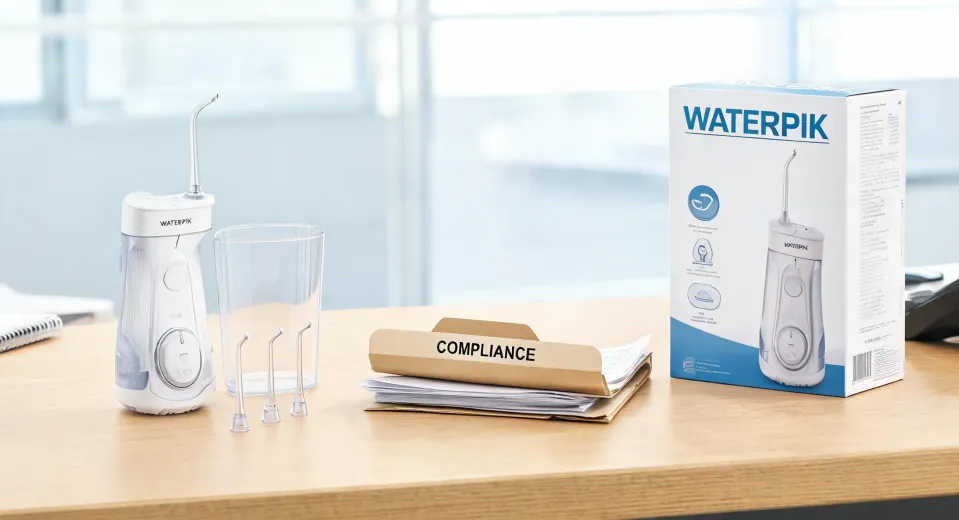
Let's get this out of the way: I don't sell Waterpik products, and I don't earn commissions from any brand. I'm the person who coordinates equipment purchasing for a regional dental supply group. In the last five years, I've handled 80+ rush orders, including same-day turnarounds for clinics that realized their water flossers weren't going to arrive before an open house.
That role turns you into a triage buyer. You stop caring about 'best' in the abstract. You start caring about what fits a specific situation. So if you're wondering whether to choose Waterpik products, here's what I'd tell you if you called me at 9 p.m. during a deadline.
There Are Three Buying Scenarios, Not One
I've learned the hard way that there is no universal answer. The right water flosser depends on whether you are:
- A dental clinic buying for patient care.
- A distributor, dealer, or purchasing agent stocking inventory.
- A home user trying to solve an appliance problem (or someone who accidentally landed here).
At least, those are the three buckets I've seen in my own work. Your situation might be different, but this will get you close.
Scenario 1: Buying Waterpik Products for a Dental Practice
If you're buying for operatories, I'd start with a countertop model, not a cordless one. Countertop units have larger reservoirs, more pressure settings, and no battery to charge between patients. The Waterpik Aquarius is the model I've ordered most often for fixed treatment rooms. The Cordless Advanced makes sense for a small practice with no plumbing point near the chair, but you'll trade away reservoir size and battery management.
Let me rephrase something before you quote me: I'm not saying the cordless is less clinical. I'm saying it's less practical for a room where the unit stays in one place. In my experience, the cordless gets tucked into a drawer, and then nobody uses it. A countertop unit has to be visible and ready to work.
This is where the Waterpik vs Philips water flosser review question usually comes in. I try to be fair: Philips Sonicare AirFloss is a good product line, but it's a different form factor. AirFloss uses a burst of air and water. Waterpik products use a continuous stream, which is better for fixed bridges, braces, and deep pockets. For a traveling patient, the Philips model might be the smarter choice. I won't say Philips is 'bad.' It's not. It's just different. What I won't do is tell you one brand is universally better, because your inventory, your patients, and your countertops will make that decision for you.
One more thing here: don't ignore the clinical angle. Waterpik has published clinical research in peer-reviewed journals, and several models carry the ADA Seal of Acceptance. As of Q1 2025, the seal is model-specific, so verify the exact SKU before you put it on your letterhead.
In March 2024, 36 hours before a clinic's opening, I realized the cordless units we'd ordered used a newer tip lock than the replacement tips we had in stock. Normal delivery was four days. We paid $180 in overnight shipping and got the right tips to the clinic at 6:50 a.m. That order changed how I buy: I now always verify the tip generation before placing a bulk order.
And if you're a solo dentist with two operatories, you're not too small for a real relationship. I've seen $200 first orders turn into $20,000 repeat clients. Small doesn't mean unimportant.
Scenario 2: You're Stocking Waterpik Products as a Distributor or Purchasing Agent
If you're a distributor, stop trying to win on unit price alone. The offices that buy Waterpik products from you are going to need replacement tips, descaling solution, and eventually a second unit. Stock the accessories. The margin is usually better, and it keeps you in the conversation.
I learned this in 2022 when we tried to save $4 per unit on a generic water flosser for a large order. The tips didn't click-lock properly, the patient experience suffered, and we ended up eating the restocking fee plus rushing the genuine units. That's when I implemented a 'no generic tips for patient care' policy. It cost us a little on paper, but it saved the relationship. If you sell a clinic a unit, you're gonna want to sell them a backup tip.
I should add: if you're a small reseller, I answer your email faster than some large chain orders. Not because I'm nice, but because I've watched small accounts turn into big recurring accounts. Some of my best vendor relationships started with two-unit requests.
My experience here is based on about 80 institutional orders and a lot of dealer price lists. If you're managing international logistics, your lead times and warranty rules will be different. Verify current SKUs before you commit.
Scenario 3: You're a Home User With Very Different Questions
Not everyone reading this is a dental buyer. Some of you searched for other appliances and landed here. That's fine. Let me cover a few questions I've actually received from home users.
What about the 4396701 Whirlpool refrigerator water filter?
A 4396701 Whirlpool refrigerator water filter isn't a Waterpik part. But I get why the search overlap happens: people start looking for replacement filters for one appliance and end up reading about water-related products. The rule I tell everyone is simple: exact part numbers matter more than any brand promise. If you're buying a 4396701 Whirlpool refrigerator water filter, match the part number. The same logic applies to Waterpik replacement tips. A generic tip might fit, but if it doesn't click-lock, it can come off under pressure and make a mess. Generic isn't automatically bad, but for anything water-related, I've seen enough failures to prefer OEM parts.
Water softener Livermore and hard water
If you're in Livermore and your tap water is hard, you're going to have scale buildup in any water flosser. I've typed the search phrase 'water softener Livermore' myself when I was scheduling a service call. A whole-house water softener is the permanent fix. If that's not an option, descale the unit monthly with white vinegar, and plan to replace the tips more often. I still kick myself for not checking local water hardness before recommending a corded model to someone in that area. It would have saved me the follow-up call.
How much power does a tower fan use?
This might be the most surprising question I get from clinic managers. I've been asked 'how much power does a tower fan use' more times than you'd think. Standard tower fans draw somewhere around 40 to 100 watts on high, based on the spec sheets I've checked. A Waterpik countertop unit is on for about two minutes per use and draws far less than a fan. A cordless unit is even easier on the electric bill because it charges from a small adapter. If you're worried about electricity costs, the tower fan in your waiting room is the thing to watch, not the water flosser.
How to Tell Which Scenario You're In
Here's the part everyone skips. If you're answering to a dental license or a clinical director, you're Scenario 1. If you're looking at a price list and thinking about margins, you're Scenario 2. If you're here because you were searching for a refrigerator filter, a water softener, or a tower fan's wattage, you're Scenario 3.
Still not sure? Ask yourself a simpler question: what's the deadline? If the answer is 'yesterday,' call a reputable supplier, order the genuine tips with the unit, and don't get cute with generics. I'm not going to end this with 'choose what works best for you.' That's a cop-out. My actual advice: pick the right scenario, order a backup tip, and verify current SKUs before you pay for rush shipping.
This is accurate as of Q1 2025. Waterpik changes stock models and tip generations, so verify the serial number before you order. If you're outside the North American market, availability will be different.

Greta Lindholm
Greta Lindholm is a household refrigeration analyst covering French-door, side-by-side, top- and bottom-mount refrigerators, mini fridges, beverage coolers, chest freezers, and upright freezers. She applies IEC 62552 and IEC 60335-2-24 while comparing energy consumption, usable volume, pull-down time, compartment temperature stability, freezing capacity, noise, door-seal leakage, refrigerant charge, and ambient-temperature performance. Her guides help importers, distributors, private-label teams, and appliance engineers select platforms around climate class, storage mix, efficiency labels, cabinet dimensions, service access, shipping density, and warranty exposure.