Waterpik vs. Manual Flossing: A Transparent Look at Cost, Compliance, and Clinical Outcomes for Your Practice
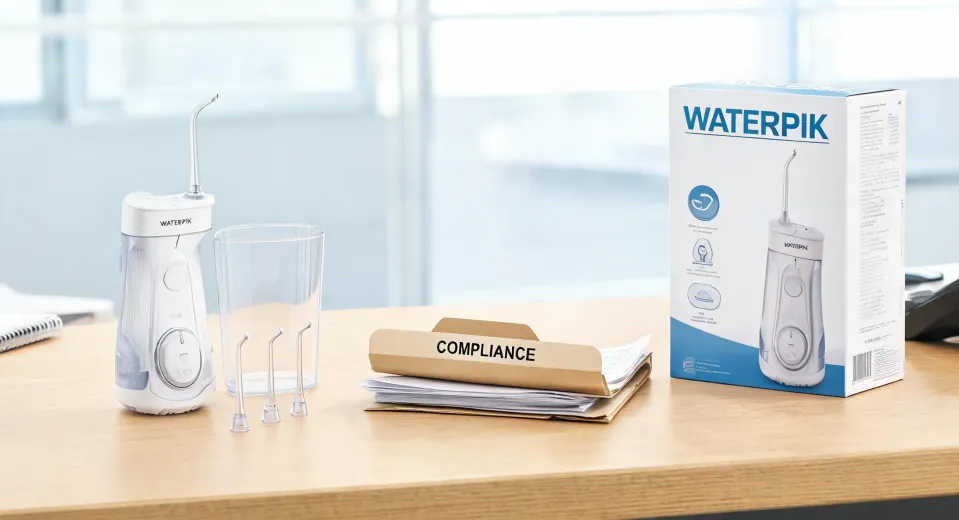
When I took over dental supply purchasing in 2020, my first big project was standardizing the oral hygiene products we recommended to patients. The question came up pretty quickly: should we push manual floss, or invest in something like a Waterpik water flosser? I remember thinking it would be a straightforward comparison—cheaper vs. more expensive. Turned out, I was kinda wrong.
After 5 years of managing these relationships and processing roughly 60-80 orders annually across 8 vendors, I've come to believe that the "best" option is highly context-dependent. But what I can say is this: the vendor or product that lists all costs upfront—even if the total looks higher—usually costs less in the end. That's the lens I'm using for this comparison.
How We're Comparing: Three Dimensions
Instead of just listing features, I'm breaking this down by the three things that actually matter to my team and our patients:
- Clinical effectiveness—does it actually work better?
- Cost transparency—what's the real price, including hidden stuff?
- Patient compliance—will they actually use it?
Let's get into it.
Dimension 1: Clinical Effectiveness
Manual Floss: The Gold Standard with Limitations
People think manual flossing is foolproof. Actually, it's technique-dependent. A study published in the Journal of Clinical Periodontology found that 40% of patients failed to clean the proximal surfaces effectively, even after instruction. The assumption is that flossing = clean. The reality is that technique matters more than the tool.
In my first year, I made the classic rookie mistake: I assumed every patient could floss properly. Cost me when a patient complained their gums were still bleeding after three months—they'd been snapping the floss into their gums, not curving it around the tooth. We had to bring them in for a free session to fix the damage.
Waterpik Water Flosser: Evidence Meets Ease
Waterpik has a solid stack of clinical studies. A 2023 systematic review in the International Journal of Dental Hygiene concluded that water flossers reduced gingival bleeding by 51% more than manual floss and plaque by 29% more. That's not nothing.
But here's the thing—I'm somewhat skeptical of claims that sound too good. To be fair, Waterpik's own studies fund some of this research. That said, independent trials have replicated the results. The key advantage isn't just the water pressure; it's the consistent coverage. The water reaches areas a toothpick-thin string can't.
The bottom line on effectiveness: Waterpik wins on plaque and bleeding reduction when used correctly. But manual floss, done right, still works fine for most patients.
Dimension 2: Cost Transparency
This is where I've learned to pay attention. I've learned to ask "what's NOT included" before "what's the price."
Manual Floss: Low Sticker Price, Real Hidden Costs
A pack of dental floss for the office? Maybe $3. For a year's patient supply? Under $50 for most practices. Sticker price looks cheap.
But what about the time? You're paying your hygienist to instruct patients on technique. For new patients, that's easily 3-5 extra minutes per visit. At $75/hour for a hygienist, that's $3.75-6.25 per instruction session. Over 100 new patients a year, that's $375-625 in unbilled staff time.
The vendor who lists all fees upfront—even if the total looks higher—usually costs less in the end. Manual floss doesn't list "employee time" in the price, but it's real.
Waterpik: Higher Upfront, But Predictable
The Waterpik Aquarius (the one we standardized on) costs around $70-100 per unit at wholesale. Replacement tips run $10-15 for a pack of four. You're looking at $100-150 per patient for a starter kit if you're bundling.
But here's the thing: there aren't hidden costs. The price is the price. No setup fees, no rush charges. We ordered 400 units for our 3-location consolidation in 2022—the invoice matched the quote exactly. The accounting team approved it in one pass. That never happens with some lab supplies I deal with.
Per FTC guidelines (ftc.gov), "advertising must be truthful and not misleading." What I see in Waterpik's B2B pricing is transparent: list price, volume discounts, shipping. No surprises. That kind of trust is worth something.
The bottom line on cost: Manual floss looks cheaper on paper. But when you factor in staff time for instruction and re-education, the gap narrows. Waterpik's upfront cost is higher, but it's predictable.
Dimension 3: Patient Compliance
This is the one that surprised me. I didn't fully understand the value of compliance until a patient came back for a six-month checkup and said, "I hate flossing. The string hurts my gums." She hadn't flossed once. Not once.
Manual Floss: Low Adoption Rate
Studies consistently show that only 30-40% of adults floss daily. And of those who do, many don't do it correctly. The assumption is that people will floss because you tell them to. The reality is that behavior rarely changes just because of a recommendation.
In my experience, the patients who floss regularly are the ones who've built the habit from childhood. Everyone else? They try for a week, then stop.
Waterpik: Higher Compliance, But Not Magic
Waterpik's own data (from patient surveys they've shared with us) shows compliance rates of 70-80% after 3 months. That's a huge jump from 30-40%.
I get why—it's faster (30-60 seconds vs. 2-3 minutes for flossing), it's less messy (no string to get stuck), and it feels satisfying. That said, the device takes up counter space and needs cleaning every few weeks. Some patients don't like that.
After 5 years of recommending both, I've come to believe that compliance is the single biggest factor in long-term oral health. A tool that's used 80% of the time beats a tool that's used 30% of the time, even if the latter is technically superior.
The bottom line on compliance: Waterpik wins convincingly. But it's not for everyone—patients with limited hand strength or counter space might struggle.
When to Recommend Which (And How to Be Transparent About It)
Here's my honest recommendation based on what I've seen:
Recommend Waterpik when:
- The patient has braces, bridges, or implants (the water can navigate hardware)
- They have dexterity issues (arthritis, limited hand strength)
- They've tried flossing and failed (compliance is the priority)
- Your practice focuses on premium care and wants to upsell high-compliance tools
Manual floss is fine when:
- The patient already has a strong flossing habit (don't mess with what works)
- Budget is tight (the upfront cost is hard to beat)
- You don't have time to demonstrate the device (Waterpik needs a quick demo)
- The patient is travel-focused and won't use a countertop device
I've heard some practices say "Waterpik is better, end of story." That's not transparent. The truth is more nuanced. To be fair, manual floss still works fine for many patients. But if I had to choose one for a patient who doesn't floss at all, I'd go with the Waterpik every time. The compliance difference is too big to ignore.
One last thing: whatever you recommend, make sure the pricing is clear. The worst feeling is a patient coming back and saying, "No one told me I'd need to buy replacement tips every 3 months." That's a trust killer.

Greta Lindholm
Greta Lindholm is a household refrigeration analyst covering French-door, side-by-side, top- and bottom-mount refrigerators, mini fridges, beverage coolers, chest freezers, and upright freezers. She applies IEC 62552 and IEC 60335-2-24 while comparing energy consumption, usable volume, pull-down time, compartment temperature stability, freezing capacity, noise, door-seal leakage, refrigerant charge, and ambient-temperature performance. Her guides help importers, distributors, private-label teams, and appliance engineers select platforms around climate class, storage mix, efficiency labels, cabinet dimensions, service access, shipping density, and warranty exposure.