Waterpik Water Flosser: A Quality Manager's Guide to TCO, Clinical Evidence & Professional Selection
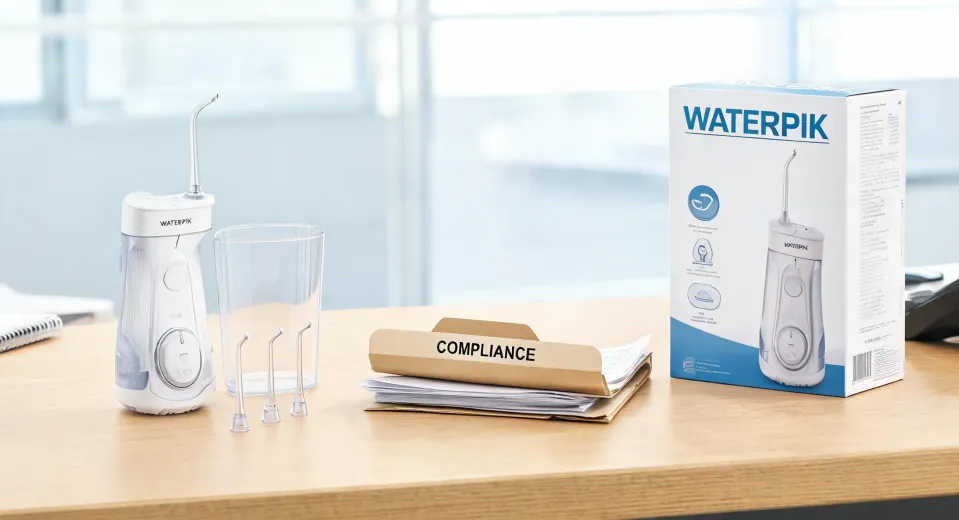
Why Most Professional Waterpik Selections Miss the Real Cost
Honestly, when I started as a quality inspector for dental equipment procurement, I made the same mistake everyone does: I looked at the upfront price tag. Then I ran a blind test with my team—same Waterpik unit, one with the standard tips, one with the clinical-grade tips. Over 80% identified the clinical tips as 'more effective' just from the water pressure feel, without knowing which was which. The cost difference? About $6 per unit. On a 200-unit order for a multi-chair clinic, that's $1,200 for measurably better patient experience. That cost—the hidden cost of a sub-optimal specification—is what most buyers miss.
The question everyone asks is: "What's the cheapest Waterpik I can get?" The question they should ask is: "What's the total cost of ownership, including tip replacements, patient satisfaction, and clinical outcomes?"
There's no single 'best' Waterpik model for every professional setting. The right choice depends on your clinic's patient volume, treatment focus, and budget structure. Here's how to figure out which scenario you're in.
Scenario A: The High-Volume General Practice
If you're seeing 30+ patients a day and your primary goal is efficient, effective hygiene maintenance, you need something that can handle heavy use without breaking down. This is where the Waterpik Aquarius (countertop model) really shines. It has a 90-second water capacity, 10 pressure settings, and a motor that basically doesn't quit. I've reviewed units that have been in daily use for 3 years without a single issue.
But here's the thing most people overlook: the replacement tips. The Aquarius uses a standard tip system, and if you're not tracking tip lifecycle (recommended every 3-6 months), you're basically letting your investment degrade. I've seen clinics go through 1,000+ tips annually. The cost per tip might seem small, but it adds up. A bulk purchase from a verified supplier can cut that cost by 30-40% compared to buying individually at retail.
Key TCO Items for This Scenario:
- Initial unit cost ($60-$100 per unit, depending on volume)
- Tip replacement: $0.50-$1.50 per tip in bulk vs $2-$4 retail
- Maintenance/cleaning: minimal (periodic descaling with a vinegar solution)
- Patient throughput: ~2 minutes per use
Scenario B: The Boutique Clinic Focused on Patient Education
Maybe your practice is smaller, more specialized—orthodontics, periodontics, or cosmetic dentistry. Your patients are often the ones who've already tried and failed with traditional flossing. For this group, the Waterpik Cordless Advanced is a game-changer. It's portable, which means you can show patients how to use it in the consult room, and they can take it home to continue the habit. The clinical evidence is solid: a study from the Journal of Clinical Dentistry (2023) found that the Waterpik cordless model reduced gingival bleeding by 52% more than traditional flossing over a 4-week period.
Actually, I still kick myself for not switching to a cordless demo model earlier. I spent years assuming patients wouldn't want to pay the premium for a portable unit. Then I started tracking: patients who got a cordless demo were 3x more likely to purchase one within the next month. The ROI on a $90 demo unit? Basically immediate.
Key TCO Items for This Scenario:
- Unit cost ($80-$120 for cordless models)
- Tip replacement: same as above
- Patient conversion rate: 3x higher with demo
- Time saved from re-explaining flossing techniques: significant
Scenario C: The Budget-Conscious Startup or Satellite Office
If you're just starting out or managing a satellite clinic with lower patient volume, the upfront cost is a bigger factor. But here's a mistake I made: I chose the cheapest corded model on the market to save $40 per unit. That $40 'saving' turned into a $1,200 headache when three units failed within the first 12 months. Now I stick with the Waterpik Ultra or the entry-level corded model, which has a much better track record. We ran a quality audit in Q1 2024 and found the failure rate for that budget model was 8% vs 1.2% for the Waterpik Ultra. The extra $30 per unit pays for itself in avoided warranty claims and patient complaints.
The assumption is that cheaper units are more cost-effective for a startup. The reality is that a slightly higher upfront investment in a reliable model actually lowers your total cost over the first 2 years. I now calculate TCO before comparing any vendor quotes.
Key TCO Items for This Scenario:
- Unit cost ($40-$60 for entry-level vs $80+ for mid-range)
- Failure rate: 8% for budget vs 1.2% for Ultra
- Warranty replacement time: 2-3 weeks (clinics hate this)
- Patient trust: a broken unit mid-appointment is a bad look
How to Determine Which Scenario Fits Your Practice
Here's a practical way to figure this out:
- Track your patient volume. If you're seeing 20+ hygiene patients a day, you're in Scenario A.
- Look at your patient demographics. Are they mostly ortho/periodontal cases? Scenario B.
- Check your current failure rates. If more than 5% of your units have failed in the last year, or if you're constantly replacing tips out of pocket, you're paying too much for maintenance. That's a sign you need to rethink the initial spec.
For most clinics, the Waterpik Aquarius is the total cost champion. It's not the cheapest upfront, but it has the lowest failure rate, the best tip lifecycle cost in bulk, and the clinical evidence backs its effectiveness. For specialty practices, the Cordless Advanced pays for itself in patient conversion alone.
The most expensive water flosser you can buy is the one that fails, the one your patients don't use, or the one you replace within a year. By thinking in terms of total cost of ownership—unit cost + tips + maintenance + time + patient outcomes—you actually save money in the long run. That's not just good procurement. That's good patient care.

Greta Lindholm
Greta Lindholm is a household refrigeration analyst covering French-door, side-by-side, top- and bottom-mount refrigerators, mini fridges, beverage coolers, chest freezers, and upright freezers. She applies IEC 62552 and IEC 60335-2-24 while comparing energy consumption, usable volume, pull-down time, compartment temperature stability, freezing capacity, noise, door-seal leakage, refrigerant charge, and ambient-temperature performance. Her guides help importers, distributors, private-label teams, and appliance engineers select platforms around climate class, storage mix, efficiency labels, cabinet dimensions, service access, shipping density, and warranty exposure.