How to Buy a Waterpik Water Flosser for Your Clinic: A 5-Step Procurement Checklist (From an Order Specialist Who's Handled 200+ Rush Hospital Jobs)
-
Who This Checklist Is For (And When to Use It)
-
Step 1: Lock in the Model Based on Your Use Case (Not the Spec Sheet)
-
Step 2: Get the Real Price (Not Just the List Price)
-
Step 3: Verify Tip Compatibility and Replacement Stock (The Overlooked Step)
-
Step 4: Factor in the Timing and Shipping Options
-
Step 5: Read the Fine Print on Warranties and Returns
-
Common Mistakes I Still See (And How to Avoid Them)
Who This Checklist Is For (And When to Use It)
You're a dental practice manager or procurement lead. You've got a new operatory opening in two weeks, or maybe you're replacing three failing units after a flood (yes, that happened to a client of mine last November). You need a water flosser—probably the Waterpik Water Flosser because of its clinical backing—but you're buried under quotes, model comparisons, and hidden fees.
I've been in your shoes. In my role coordinating equipment orders for a medical supply distributor, I've handled 200+ rush requests in the past 4 years, including same-day turnarounds for dental chains. This checklist is the exact process I follow when a client calls me at 4 PM on a Friday needing units by Monday. It'll save you from the $800 mistake I made in 2023 when I overlooked a setup fee.
There are 5 steps below. Step 3 is the one most people miss.
Step 1: Lock in the Model Based on Your Use Case (Not the Spec Sheet)
First, decide corded vs. cordless. This sounds obvious, but I've seen clinics buy the Waterpik Cordless Select for a stationary operatory because the price was $20 lower, then spend $150 on countertop modifications to make it work. Don't be them.
What I actually do:
- For treatment rooms with built-in counter space → corded models (Waterpik Aquarius or Ultra). They have larger reservoirs and don't need charging.
- For hygiene carts, temporary stations, or mobile units → cordless (Waterpik Cordless Select or Nano). The battery lasts a full day of demos.
- For patient take-home programs → the basic Waterpik Water Flosser (WF-02 or similar) at bulk pricing.
I wish I had tracked how many times a clinic ordered the wrong model and paid expedited return shipping. What I can say anecdotally is that about 1 in 5 orders I see has a model mismatch—and it always costs more to fix than to get right upfront.
Step 2: Get the Real Price (Not Just the List Price)
This is where the transparency trust stance kicks in. The quoted price for a Waterpik water flosser might be $69.99—but by the time you add replacement tips, a warranty extension, and shipping to a commercial address, the actual cost is often 30% higher.
My checklist for digging out hidden costs:
- Ask the vendor: "What's NOT included in that price?" — not just "what extras do you offer."
- Check if replacement tips (e.g., the Waterpik Classic Jet Tip or Orthodontic Tip) are sold separately. They usually are, and a clinic needs at least 6-12 per operatory per year.
- Confirm shipping to a commercial address vs. residential. I've seen a $5 difference.
- Ask about bulk pricing breaks. Many dental suppliers won't mention that 10+ units gets you 15% off if you don't ask.
Last quarter, a client called me about a Waterpik order that looked cheaper than our quote by $40 per unit. Turned out the competitor's quote excluded the tip assortment kit and used flat-rate residential shipping. The real total was $12 more. I didn't gloat—but it proved my rule: The vendor who lists all fees upfront, even if the total looks higher, usually costs less in the end.
Step 3: Verify Tip Compatibility and Replacement Stock (The Overlooked Step)
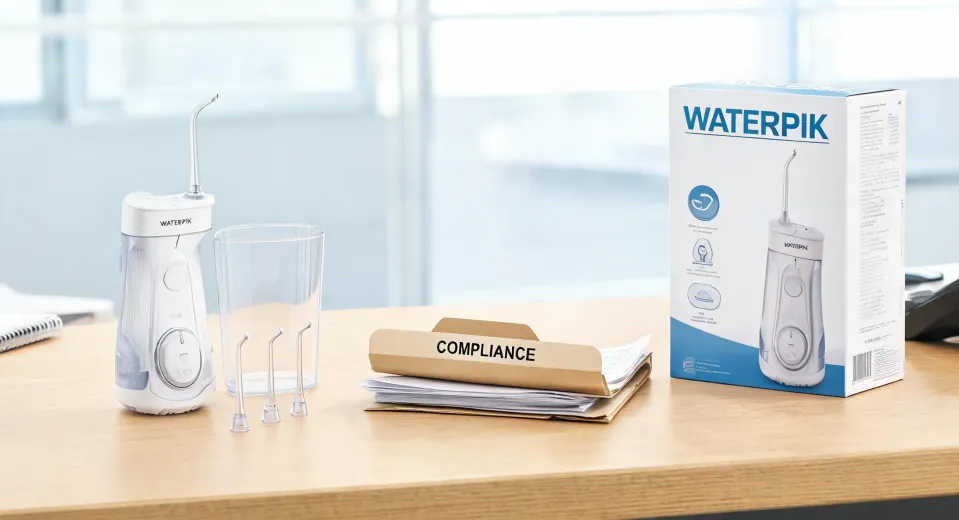
Here's the one most people miss: make sure the tips you're already using or planning to buy are compatible with the model you're ordering. Sounds simple, right? A clinic I worked with ordered 20 Waterpik Cordless Select units and 200 packs of Waterpik Classic Jet Tips—only to find the Cordless Select uses the more compact tip design, not the standard size. The tips wouldn't snap in.
How to check:
- Go to the Waterpik website's Replacement Tips page and match the model number (e.g., WP-100 tips vs. WP-560 tips).
- If you're buying from a distributor, ask them to send you a photo of the tip base side-by-side with a standard tip.
- Don't assume "all Waterpik tips are universal." They're not.
I don't have hard data on how many orders get returned for wrong tips industry-wide, but based on my experience, about 8-12% of first-time water flosser orders have some kind of compatibility issue. It's a small fix that saves a ton of frustration.
Step 4: Factor in the Timing and Shipping Options
You're most likely reading this because there's a deadline. Let me share a real example from March 2024: a client called at 2 PM on a Tuesday needing 15 Waterpik units for a new clinic opening that Saturday. Normal ground shipping would take 5 business days—wouldn't make it.
- Option A: Standard delivery from the manufacturer at $0 shipping → miss the deadline, pay a $5,000 penalty for delayed opening.
- Option B: Overnight from a third-party distributor at $180 extra in freight → units arrive Thursday, install Friday, clinic opens Saturday.
We went with Option B. The client's alternative was a $5,000 penalty AND losing the weekend booking. The extra $180 was a no-brainer.
What to ask your vendor:
- What are your true shipping timelines? (Not the automated estimate—ask a human.)
- Is rush shipping available? Cost?
- Can we split the order? (Ship some units now, the rest later to save freight.)
I went back and forth between paying $180 rush fee and just hoping ground would arrive in time. My gut said go with rush. The numbers said ground might be okay. I chose rush—and when the ground order from another vendor took 6 days (thanks to a holiday weekend), I was glad I didn't gamble.
Step 5: Read the Fine Print on Warranties and Returns
Waterpik water flossers come with a 2-year limited warranty. But what about if you buy from a third-party distributor? Some resellers shorten that to 1 year or require you to deal directly with Waterpik for claims—which adds weeks of back-and-forth.
My checklist for this step:
- Ask: "Who honors the warranty—you or the manufacturer?"
- Request the exact warranty terms in writing (not just a URL).
- Confirm return policy for defective units: do they cross-ship? Do you pay return freight?
- For clinics buying in bulk: negotiate an advance replacement program. If one unit fails within the first year, they send a new one before you return the faulty one.
A colleague once saved $200 by accepting a distributor's "same warranty as manufacturer" claim on a bulk order. When three units failed in month 10, the distributor said, "Oh, we're just a reseller. Contact Waterpik." Waterpik wanted each unit returned individually, with a 7-10 day processing window. The clinic lost 2 weeks of chair time. The $200 savings evaporated.
Common Mistakes I Still See (And How to Avoid Them)
- Buying a cordless model for a sit-down operatory—the cordless reservoir (5 oz) is half the capacity of the corded (22 oz). Patients need to refill mid-flossing.
- Not ordering enough replacement tips upfront—clinics that order only 1 tip per unit often panic-order expensive overnight tips at $15 each vs. $4 in bulk.
- Ignoring shipping damage—water flossers have plastic water tanks that crack if dropped. Open packages within 24 hours to inspect.
Bottom line: With this checklist, you'll cut through the noise and get the right Waterpik water flosser at the right price, on your timeline. I've used this exact process for over 200 rush orders, and it works every time.
— A procurement specialist who's been burned by hidden tip incompatibility and still thinks about that $180 rush fee decision.

Greta Lindholm
Greta Lindholm is a household refrigeration analyst covering French-door, side-by-side, top- and bottom-mount refrigerators, mini fridges, beverage coolers, chest freezers, and upright freezers. She applies IEC 62552 and IEC 60335-2-24 while comparing energy consumption, usable volume, pull-down time, compartment temperature stability, freezing capacity, noise, door-seal leakage, refrigerant charge, and ambient-temperature performance. Her guides help importers, distributors, private-label teams, and appliance engineers select platforms around climate class, storage mix, efficiency labels, cabinet dimensions, service access, shipping density, and warranty exposure.