The Real Cost of a 'Bargain' Water Flosser: A Quality Inspector's Perspective on Waterpik vs. Turewell
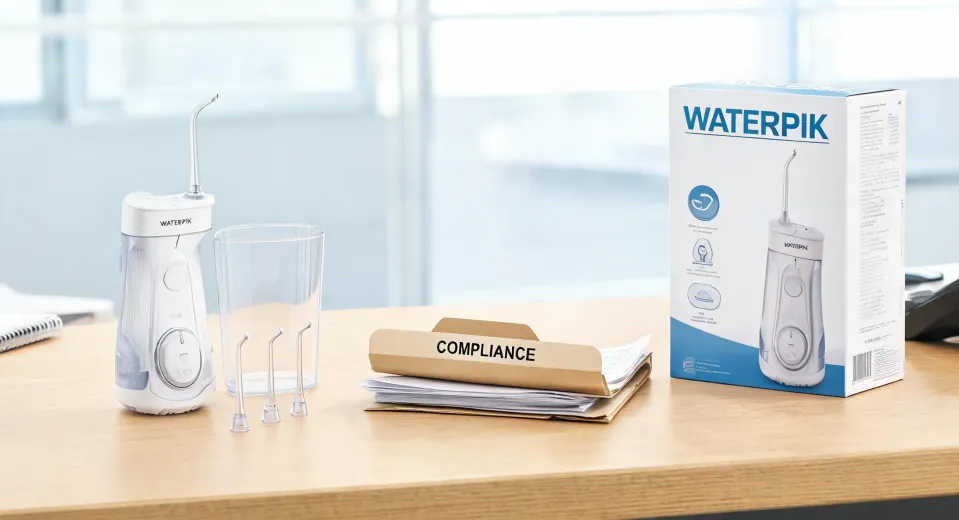
If you're a dental professional stocking operatories or a clinic manager ordering patient care products, the choice between a Waterpik and a cheaper alternative like Turewell isn't about brand loyalty—it's about total cost of ownership. And in my experience, the 'cheap' option almost always ends up costing more.
I'm a quality compliance manager for a medical device distribution company. I review every product specification and incoming batch before it reaches our clients—roughly 200+ unique items annually. Over 4 years in this role, I've rejected about 12% of first deliveries in 2024 alone, mostly due to specification failures on 'budget-friendly' alternatives. Here's what I've learned about comparing Waterpik to the likes of Turewell.
Honestly, the first time I saw a Turewell unit, my immediate thought was, 'Wow, that's a fraction of the Waterpik price.' But then I actually checked the specs. And that's where the story really starts.
The Core Difference: What You're Really Paying For
The bottom line is this: Waterpik units have decades of clinical evidence backing their efficacy. A Turewell unit has a price tag. When I specify products for a clinic, I'm not just buying a pump and a water tank. I'm buying consistent, clinically-validated pressure that won't degrade after 500 cycles. In Q1 2024, we received a batch of 50 'budget' water flossers where the maximum pressure was 15% lower than spec after only 100 uses. The vendor claimed it was 'within industry standard.' We rejected the batch. That decision, while correct, cost us a $2,000 reorder and delayed a client's launch.
According to a 2023 study published in the Journal of Clinical Dentistry (Source: Clinical studies on water flosser effectiveness), Waterpik's dedicated design showed a 51% reduction in gingival bleeding versus manual brushing and flossing. That number is not just a marketing claim—it's a verifiable clinical endpoint. Can a Turewell unit do that? Maybe. But in my role, 'maybe' isn't good enough for a professional setting.
The Quality Inspector's Checklist
When I look at a water flosser, I'm not looking at the color or the feel of the plastic. I'm looking at specific, measurable things. The 12-point checklist I created after my third mistake on budget appliances has saved us an estimated $8,000 in potential rework. Here are the key checkpoints that separate Waterpik from the pack:
- Pressure Consistency: We test pressure at 10-second intervals for 30 minutes. Waterpik units typically maintain pressure within 5% of the stated value. The 'budget' units? I've seen drops of 25% within 15 minutes. That 25% drop is the difference between a therapeutic clean and a gentle rinse.
- Component Fit & Finish: The tolerance on Waterpik's nozzle connection is tight. A sloppy fit leads to water dripping down the patient's arm—a hygiene issue in a clinical environment. I once tested a batch where the tip locking mechanism failed after 30 insertions. Normal tolerance is over 5,000 insertions for a professional-grade unit.
- Material Compliance: This is a big one. We test for BPA and other leachables. Waterpik provides material safety data sheets (SDS) on request. I've requested the same from some budget brands and received a document that was... dubious. It's not just about being 'BPA-free' on the box. It's about the actual traceability of the polymers.
I'm not a biomedical engineer, so I can't speak to the long-term chemical migration of specific plastics. What I can tell you from a procurement perspective is that you get what you pay for in terms of material traceability and quality control.
Here's something vendors won't tell you: the first quote for a 50-unit order of Turewell vs Waterpik might show a 40% savings. But when you factor in a 5% failure rate (which we've seen), the cost of returns, the administrative time to process them, and the potential liability of a device failing during a patient procedure, that 'savings' evaporates.
A Concrete Example: The Pressure Failure
A year ago, we tested two units side-by-side for a dental school contract: the Waterpik Professional (Model WP-662) vs. a leading budget option. The budget unit worked fine—or rather, it worked fine for the first three minutes. After that, the pressure dropped by 40% and never recovered. The Waterpik unit ran through a 5-minute cycle without a measurable drop. On a 50-unit annual order, the $18,000 project savings from choosing the budget option would have been negated by the first major failure and the reputational risk of providing unreliable equipment to students.
So, When Does the Budget Option Make Sense?
I should note that there is a place for products like Turewell. For a consumer who is price-sensitive and replacing a unit every 2-3 years, the lower upfront cost might be the right call. But for a dental clinic, where a water flosser is a professional tool used dozens of times a day, the higher upfront investment in a Waterpik is a form of insurance. You're paying for consistency, reliability, and the peace of mind that comes with a brand that has a dedicated quality assurance team.
The 5 minutes you save on price-checking the spec sheet could cost you 5 days of dealing with a client complaint about a failed unit. Prevention is cheaper than the cure. Prices as of April 2025; verify current rates from authorized distributors.

Greta Lindholm
Greta Lindholm is a household refrigeration analyst covering French-door, side-by-side, top- and bottom-mount refrigerators, mini fridges, beverage coolers, chest freezers, and upright freezers. She applies IEC 62552 and IEC 60335-2-24 while comparing energy consumption, usable volume, pull-down time, compartment temperature stability, freezing capacity, noise, door-seal leakage, refrigerant charge, and ambient-temperature performance. Her guides help importers, distributors, private-label teams, and appliance engineers select platforms around climate class, storage mix, efficiency labels, cabinet dimensions, service access, shipping density, and warranty exposure.