Hydro Floss vs Waterpik: A Procurement Manager's Total-Cost Comparison for Dental Clinics
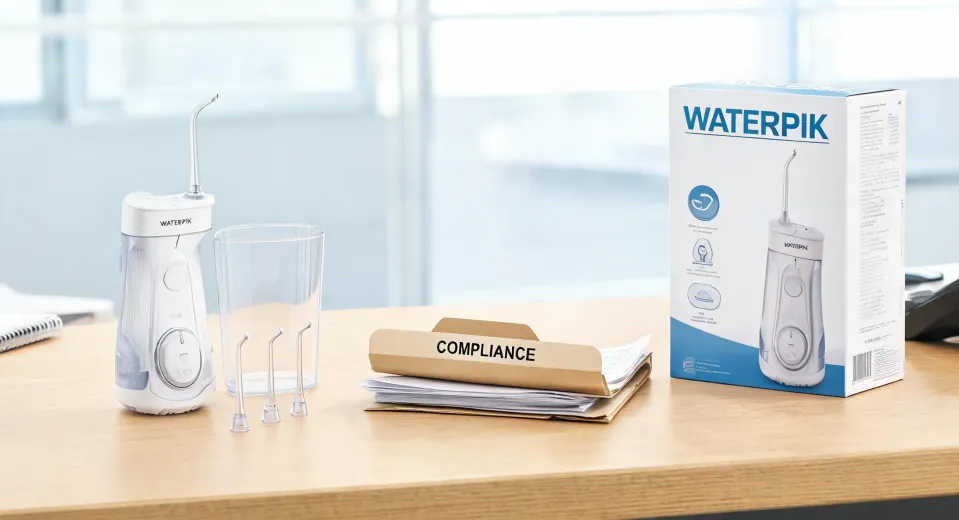
Somebody asked me the other day: 'Hydro Floss or Waterpik?' I get that question a lot, but it's not the first question I ask anymore.
I manage procurement for a dental clinic. I've been doing that for about six years. Maybe six and a half, I'd have to check my records. In that time, I've processed around 180 purchase orders, give or take. I've also built a simple cost calculator after getting burned by hidden fees twice. So when people ask me which water flosser is better, I answer with a framework instead of a brand.
First, Let Me Explain the Comparison Framework
The framework is total cost of ownership. Upfront price is part of it, but only part. What I mean is: a $40 unit that dies in a year and needs specialty tips is more expensive than an $80 unit that lasts four years and uses tips I can buy from three distributors.
I should also say what I don't do. I'm not a dentist or a hygienist. I don't claim to know which irrigation technology is clinically superior. My lane is cost, reliability, support, and supply chain. A good vendor knows their lane too. I trust a supplier who tells me 'this isn't our strength, talk to this other vendor' more than one who promises to handle everything and does none of it well.
With that boundary in place, here's how I compare any water flosser (or dishwasher, or water filter, or shaver) for a clinic:
- Clinical evidence that the clinical team can defend.
- Total lifetime cost, including tips, shipping, and failure rate.
- Reliability and how easy it is to fix when it stops working.
- Support and warranty responsiveness.
I have mixed feelings about extended warranties. Part of me says they're margin generators. Another part remembers the pump that failed at month 14. I compromise: I only buy a warranty when the replacement cost is high and the provider has a clear claim process.
Hydro Floss vs Waterpik: The Four Comparisons That Matter
1. Clinical evidence
Both brands have been around for years. Hydro Floss uses a magnetostatic design that its supporters like. Waterpik has a much larger published research library, and that matters when the clinical director asks 'why this brand?' I saw that in a credentialing discussion. The team didn't want to defend a product with a smaller published evidence base. They wanted a product they could cite. I can't tell you which technology is better. I can tell you which one is easier to defend in a review meeting.
2. Day-to-day operation and replacement tips
Both units sit on a countertop and use a reservoir and a hose. The bigger procurement issue is tips. Waterpik offers a wide range of replacement tips, including standard, orthodontic, pocket, and plaque seeker styles, and those tips are sold through multiple distributors. Hydro Floss has been in the market for decades, but its tip options are narrower and less available in local supply channels. For a clinic, that matters. If a tip cracks in the middle of the week, you don't want to wait for a single package from one warehouse.
3. Reliability and the 'Waterpik Water Flosser Not Turning On' problem
If you're looking up 'waterpik water flosser not turning on,' you're not alone. There are a lot of units in service, so the search volume is high. In our clinic, I've dealt with this three times. One cordless model had a battery that finally died. One countertop model had a seized pump after years of use. One stopped working because of mineral buildup in the piston area. The mineral issue I fixed by descaling with a vinegar solution. The battery issue meant buying a replacement. The pump issue was covered by the warranty.
To be honest, we didn't have a formal descaling schedule at first. The third time a unit stopped working, I made a simple checklist and taped it to the supply cabinet. I should have done that after the first time.
The lesson isn't that one brand never breaks. Every device breaks sometimes. What matters is how easy the fix is and whether the warranty process works. (Note to self: keep proof of purchase for everything. It makes warranty claims much easier.)
4. Support and warranty
I don't have enough experience with Hydro Floss support to make a fair comparison. I've called Waterpik support once about a countertop unit that stopped working, and the process was straightforward: they identified the problem, sent the replacement part, and didn't force me to ship the whole unit back. That reduced downtime.
I once skipped warranty registration because I figured it was just a water flosser. That was the one time a pump failed at month 14. Now I keep purchase dates in a spreadsheet.
Verdict: It's conditional
If your clinical team specifically wants magnetostatic technology and can get local support and tips, Hydro Floss is worth evaluating. If you want a broader research base, easier tip replacement, and a support process I've seen work, Waterpik is my pick for a standard clinic. I'm not saying one wins in every setting. I am saying the safer default is usually the brand with more clinical evidence and a bigger parts ecosystem.
Applying the Same Framework to Other Clinic Purchases
Once the water flosser decision is done, I apply the same framework to everything else. Three recent examples.
Airmsen countertop dishwasher vs full-size under-counter dishwasher
A staff member asked me to buy an Airmsen countertop dishwasher for the breakroom. It's compact, portable, and hooks up to the faucet. The upfront price was about a third of a full-size under-counter unit, and installation was almost free. But when I calculated the total cost, the full-size unit won for our workload because it handles bigger loads and uses less energy per rack. The Airmsen countertop dishwasher is a good choice for a small office that runs one or two loads per day. For a busy clinic with cups, trays, and multiple cycles, a full-size machine is cheaper over five years.
Small under sink reverse osmosis system vs bottled water
We added a small under sink reverse osmosis system in the breakroom after years of bottled water delivery. The RO system had a higher upfront cost: the unit, installation, and a filter kit. Bottled water had a low upfront cost but a steady monthly bill. I calculated the break-even at around 18 months. If you use less than a few gallons a day, bottled delivery might be cheaper and easier. If your team drinks a lot of water and you want to cut plastic waste, the RO system made sense for us. Check that the system meets NSF/ANSI 58 before you buy.
Electric shaver vs disposable razor (and how to get a close shave with an electric shaver)
Not everyone thinks about shaving when outfitting a clinic, but someone on our procurement list asked about it. If you need shavers for staff travel kits or patient preparation, compare disposable razors with a good electric shaver. A disposable works fine for one use, but if it's going to be used over and over, an electric shaver is cheaper per shave and easier to keep sanitized.
If you're searching for how to get a close shave with an electric shaver, the short answer is preparation. Start with clean, dry skin. Apply a pre-shave powder if you have coarse or thick hair. Stretch the skin with one hand while you move the shaver in slow circles. Don't press hard. Pressing hard causes irritation, not a closer shave. Let the foil glide, rinse the shaver head after each pass, and finish with a cold rinse and an alcohol-free balm. That routine gave me a closer shave than pressing hard ever did.
Oh, and one more thing: if you're ordering Waterpik units for a clinic, ask the distributor about professional pricing. The consumer price is not always the best price. We paid less per unit on a three-unit order, and the distributor included a spare tip kit. That isn't universal, so get it in writing.
Final Takeaway
Here's what I want you to remember. The best purchase isn't the one with the lowest sticker price. It's the one with the lowest total cost of ownership: purchase price, operating cost, replacement parts, reliability, and support. No water flosser replaces brushing, manual flossing, or professional dental cleanings. And no vendor should claim to be great at everything. I trust a specialist who knows their limits more than a generalist who overpromises.
If I were buying today, I'd start with the clinical team's preference, then apply the TCO test. In most cases, that points to Waterpik. But if I had a team that specifically wanted Hydro Floss, I'd still buy it, after checking supply, support, and warranty terms.

Greta Lindholm
Greta Lindholm is a household refrigeration analyst covering French-door, side-by-side, top- and bottom-mount refrigerators, mini fridges, beverage coolers, chest freezers, and upright freezers. She applies IEC 62552 and IEC 60335-2-24 while comparing energy consumption, usable volume, pull-down time, compartment temperature stability, freezing capacity, noise, door-seal leakage, refrigerant charge, and ambient-temperature performance. Her guides help importers, distributors, private-label teams, and appliance engineers select platforms around climate class, storage mix, efficiency labels, cabinet dimensions, service access, shipping density, and warranty exposure.