I Fix Waterpik Water Flosser Problems for a Living—Here’s What Actually Goes Wrong
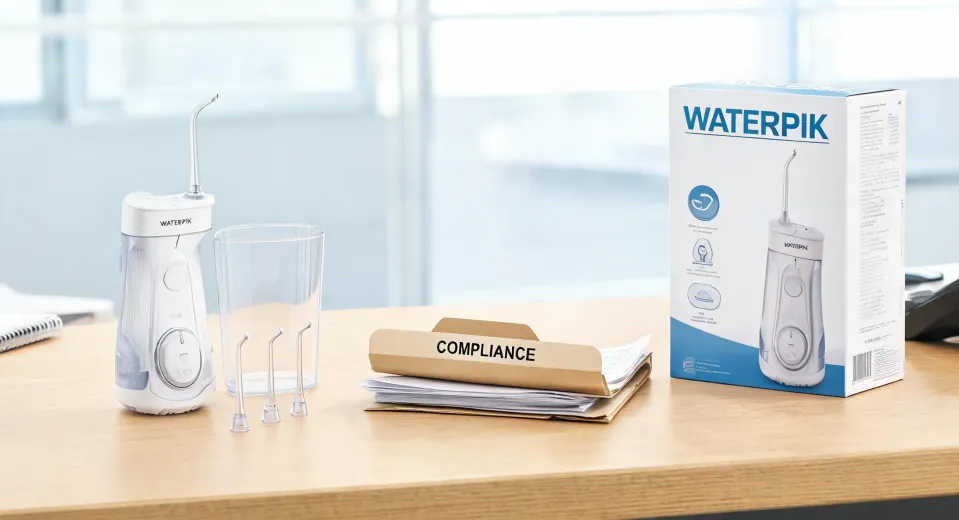
At 7:40 on a Tuesday in March 2024, a dental office manager called me in a panic. A patient education event was scheduled for that Thursday, and their Waterpik Aquarius had started sputtering the day before. By 5:00 p.m., it was completely dead. She asked the question I hear all the time: “Can you get this fixed by tomorrow?”
I’m a lead service tech at a small appliance repair company in California. In my role triaging urgent repair calls, I’ve handled 300+ emergency calls in six years, including same-day turnarounds for dental clinics, hotels, and home users. Last quarter alone, we processed 47 rush repair jobs with about a 95% on-time rate. The Waterpik case sticks with me because it was one of the few times my first diagnosis was wrong.
The 36-Hour Waterpik Emergency
Our normal turnaround for a water flosser repair is four to five days. If you have a dead unit at a dental clinic, that’s a problem—especially when a workshop for 30 patients is on the calendar. Missing that deadline would have meant losing a $300 deposit and disappointing a room full of people who took time off work to learn about oral health.
I started with the basics. The motor hummed, but no water came out. The reservoir was full, the cord was plugged into a working outlet, and the tip was clear. On most Waterpik models, there’s a “Prime and Flush” setting: point the tip into the sink, turn the dial all the way to the lowest pressure, and let it run. If no water comes out, you’ve got air locked in the line.
The first pass looked good. I cleaned the inlet screen, ran the prime cycle, and water sprayed like new. The clinic sent me on my way. Then, about 9:00 p.m. the night before their event—or rather, 8:47, if I remember correctly—the manager called back. Same problem.
That’s when I almost made a classic mistake: I started blaming the unit. “It’s a three-year-old Waterpik,” I thought. “Maybe the pump finally gave up.” But when I walked in, I noticed the replacement tip lying on the counter. The clinic had bought a bulk pack of off-brand tips to save money, and one of them had a collar that didn’t seat quite right. It felt fine in your hand, but under pressure it let water escape around the seal. A $12 wholesale tip almost cost them a $300 event.
I swapped in a genuine tip, and the unit ran perfectly.
Waterpik vs Philips Water Flosser: What I Tell Customers
While we were waiting for the unit to run through its cycle, the office manager asked whether they should switch to a Philips water flosser. I get that comparison a lot, and my answer usually surprises people.
I don’t have hard data on which brand has fewer repairs across the whole industry. What I can say anecdotally is that both Waterpik and Philips make units that fail. The real difference is what happens after the failure.
Waterpik is the platform most dental offices know. Replacement tips are everywhere, the corded models are reliable workhorses, and the Aquarius/Aquarius Ultra models have been on the market long enough that repair shops know their quirks. Philips makes some nice compact designs and has strong battery life for their cordless options.
The “waterpik vs philips water flosser” question shouldn’t start with specs or sale prices. It should start with: will you actually use it, and can you get parts and service if something breaks? At least, that’s been my experience with the units we see in our shop. Both brands have clinical evidence behind them. But a unit that sits in a closet because the tip replacement is hard to find is worthless.
I also push back on the idea that any brand is bulletproof. That thinking comes from an era when water flossers were a niche product. Today, with millions of units in bathrooms, you hear about failures more—not because quality dropped, but because the installed base is huge.
Most Common Waterpik Water Flosser Problems
If you’re here because you searched “waterpik water flosser problems,” let me save you a service call. Here are the issues we see most often, in rough order:
- Weak or no pressure after sitting for a while. Air gets trapped in the line. Use the prime/flush setting or run the unit with the tip off into a sink.
- Sputtering while you’re using it. Check the water level first. Then check the tip for debris. I’ve seen a tiny food particle cause exactly this.
- Leaks around the base. Usually a worn o-ring or a small crack in the hose. In our shop, we replace the o-ring. If the housing itself is cracked, a new unit might actually be the cheaper move.
- Doesn’t turn on. Check the GFCI outlet before you throw money at the unit. A tripped GFCI is the #1 reason a water flosser “suddenly dies.”
- Cordless model won’t charge. Clean the charging contacts. If it still won’t charge after a good wipe, the battery may be done—and on many cordless models, a replacement battery is not worth the labor.
The question everyone asks is, “Is the motor dead?” The question they should ask is, “When did you last replace the tip and run the prime cycle?”
Most buyers focus on water pressure and completely miss whether replacement tips are available in their area. That’s the outsider blind spot I see every week. It doesn’t matter if the stream is strong if you can’t get a genuine tip within a reasonable time.
When to Call a Pro (and When Not To)
If your Waterpik is out of warranty and it’s not a clogged tip or a tripped GFCI, you have options. For a device that costs between $60 and $120, a repair visit can feel steep. My rule of thumb: if the repair estimate is more than half the price of a new unit, replace it. But if it’s a professional-grade unit or a model you love, a service call can be worth it.
This same triage thinking applies to bigger home systems. When someone calls me for water heater repair Tracy homeowners often assume they need a whole new tank. Sometimes it’s just a thermocouple or a dirty pilot assembly. But I don’t walk customers through gas valve repairs over the phone. That’s a “call a licensed plumber” situation. The line between saving $150 and creating a safety hazard is too thin.
Same logic applies to mini split installers in my area. If a mini split is blowing warm air, people immediately suspect low refrigerant. It could be, but fixing that takes gauges, a vacuum pump, and a license. The bigger risk is the installation itself: wrong line-set length, no load calculation, or a drain that wasn’t pitched. When you search for “mini split installers in my area,” look for reviews that mention permits and warranty work—not just “fast and cheap.”
Does Primo Water Dispenser Have a Filter? (Yes, It Depends)
Here’s a question I get more than you’d expect: does Primo water dispenser have a filter? My honest answer is: it depends on the model. Some Primo units use filtered reservoirs. Others don’t filter at all because they’re designed for pre-purified 5-gallon jugs. Don’t assume. I made that mistake once with a client’s countertop cooler, and (note to self: read the label before making a diagnosis) it cost me an extra trip.
Check the model number, look up the manual, and see if there’s a filter indicator light. If the only water source is a sealed 5-gallon jug and the dispenser just heats or cools it, there’s likely no filter in the line. It’s the kind of thing that seems simple but trips up even experienced techs.
What I Learned From the Dental Clinic
The event went off without a hitch. The office manager later ordered a backup Waterpik unit—not because the product was bad, but because she realized a single point of failure in a patient education room is too much risk. That’s a lesson I’ve carried into my own business.
Most waterpik water flosser problems are not a reason to panic. A little troubleshooting fixes most of them. But if you’re facing something beyond your comfort zone—a gas water heater, a refrigerant issue, or an appliance that keeps leaking after basic repairs—call the right person. I’d rather spend 10 minutes explaining your options than deal with mismatched expectations later. An informed customer asks better questions and makes faster decisions. That’s good for everyone.

Greta Lindholm
Greta Lindholm is a household refrigeration analyst covering French-door, side-by-side, top- and bottom-mount refrigerators, mini fridges, beverage coolers, chest freezers, and upright freezers. She applies IEC 62552 and IEC 60335-2-24 while comparing energy consumption, usable volume, pull-down time, compartment temperature stability, freezing capacity, noise, door-seal leakage, refrigerant charge, and ambient-temperature performance. Her guides help importers, distributors, private-label teams, and appliance engineers select platforms around climate class, storage mix, efficiency labels, cabinet dimensions, service access, shipping density, and warranty exposure.