I Wasted $3,200 on Waterpik Water Flossers. Here's What I Learned.
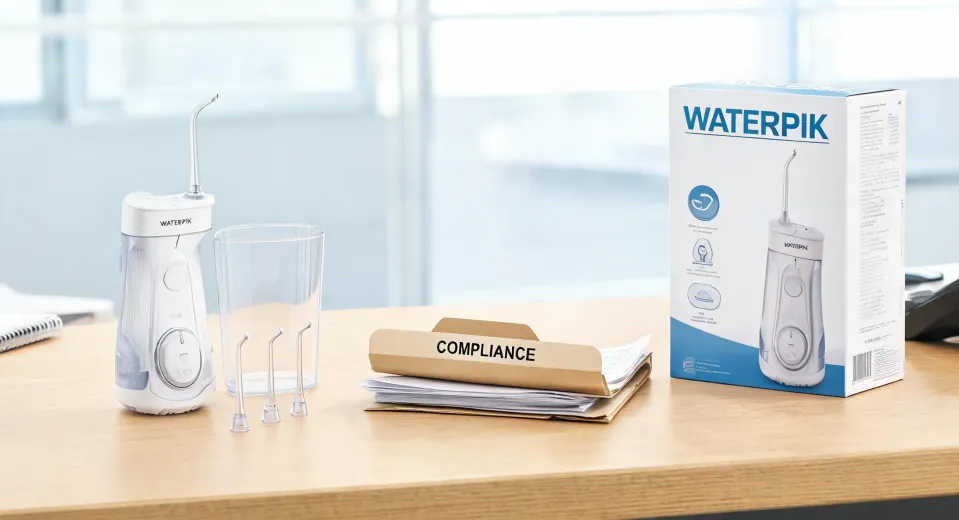
Staring at a storage shelf full of corded water flossers nobody was buying, I did some quick math. Three orders, fourteen months, $3,200 in inventory that was “fine” — just wrong for what our patients actually needed.
That's the thing about procurement mistakes. Nothing is catastrophically broken. It's just a slow leak of money, time, and patient trust.
I'm the office manager at a three-provider dental practice. I've handled supply orders for six years. And this is the story of how I made just about every Waterpik buying mistake you can make — so you don't have to.
How It Started: The “No-Brainer” Order
Back in early 2022, our team decided to stock water flossers. The clinical evidence was hard to ignore. Multiple studies have shown water flossers can be more effective at reducing plaque and gingivitis than string floss alone (Source: Journal of Clinical Dentistry, 2005; additional systematic reviews, 2020–2022). Patients were asking about them at every checkout. It seemed like a no-brainer.
I took on the ordering responsibility. I compared unit prices across three dental supply distributors, picked the mid-range quote, and hit “submit.”
Forty corded Waterpik Aquarius units. Every single one with a plug.
If you've ever managed inventory for a dental practice, you already know how this ends.
Mistake #1: I Bought for a Hypothetical Patient
I went back and forth between the corded Aquarius and the cordless WP-360 for about two weeks before I ordered. The Aquarius offered more pressure settings (10 vs. 2) and a bigger reservoir. On paper, it was the better value. The WP-360 was what patients kept asking about.
Ultimately, I chose the Aquarius because I was thinking in specs, not usage. The cordless option felt like a downgrade — fewer features, smaller tank. And the per-unit cost was slightly higher.
Had I simply asked our hygienists what their patients were requesting, I would've learned that a big chunk of our patient base wanted something portable. College students, retirees who spend winters in Arizona, people with small bathrooms. They didn't want a countertop machine with a cord.
For the record, the Aquarius is a genuinely excellent unit. Ten pressure settings, a large reservoir, and solid clinical performance. But it sat on our shelf for eight months because it wasn't what our patients actually needed.
We eventually sold most units at a discount — basically at cost — to patients who didn't really want them. There goes about $800 in potential margin.
Unit price matters. Fit matters more.
Mistake #2: The $89 “Savings” That Cost $400
Our second batch was the cordless Waterpik WP-360. Those moved quickly. Patients liked the simplicity, the two pressure settings, and the fact that it fit in a weekender bag. For a while, I felt like I'd cracked the code.
Then the replacement tip problem hit.
Waterpik recommends replacing tips every 3–6 months (per the official user manual, and in practice, they do visibly wear down). We hadn't stocked any tips. When patients came back asking, we had nothing to sell them.
Frustrated, I did something I still cringe about: I bought generic replacement tips online — about 50 packages, at a fraction of the official Waterpik price. The savings was $89.
They didn't fit properly. Some wobbled. A few leaked. One patient said the tip came loose inside her mouth mid-use — which thankfully didn't cause injury, but it absolutely scared her.
The total cost of that experiment: about $400 in refunds, patient apology calls, and expedited shipping for the official tips we eventually ordered. Plus one deeply uncomfortable conversation with a periodontist who asked, “Why are we handing out knockoff parts?” (She was not wrong.)
Cheap is not the same as affordable.
Mistake #3: Nobody Knew How to Use the WP-360
This one is the most embarrassing. By early 2024, we had the right product in stock. We had official replacement tips. We were set. And then a patient asked our newest hygienist, “How do I actually use this?”
She studied the box for a moment and said, “I think you just point it at your teeth?”
I want to say that didn't happen. It did.
We lost at least two sales that week, and more importantly, we looked like people who didn't know what they were selling. In a dental practice, credibility is everything.
For anyone who's still learning — and we now train every new hire on this — the Waterpik WP-360 is incredibly simple:
- Fill the reservoir with warm water (warm is the sweet spot — hot can irritate gums, cold is just unpleasant).
- Pick a pressure setting. The WP-360 has low and high. Start on low if your gums are sensitive.
- Lean over the sink, put the tip in your mouth, and turn it on — let it run for a second like a shower warming up.
- Glide the tip along your gumline at about 90 degrees, pausing briefly between your teeth.
- Work your way around your full mouth. Takes about 30–45 seconds.
That's the whole routine. But we didn't teach it, so we fumbled it.
I went home that night, watched Waterpik's official how-to videos, and typed up a one-page reference guide. We laminated it and taped it inside our supply cabinet. It's still there.
The Turning Point: TCO Beats Unit Price, Always
After the third mistake, I pulled up a spreadsheet and ran the numbers on everything — inventory markdowns, wasted shelf space, expedited shipping, refunds, and staff time.
TCO = total cost of ownership. Unit price plus everything that happens after you press “add to cart.”
The total was about $3,200. For a small practice, that's not practice-ending. But it's a chunk of change that went down the drain because I'd been comparing prices instead of costs.
Here's what the TCO framework looks like in practice for our Waterpik inventory:
- Unit price: The visible cost. The thing I was obsessing over.
- Inventory risk: Products that don't move cost you storage, attention, and eventually markdown dollars. Our corded Aquarius pile was living proof.
- Accessory compatibility: The replacement tip you buy today determines what fits tomorrow. Generic parts = refunds.
- Training: What your team doesn't know, your patients feel. One 15-minute training session could have prevented Mistake #3.
- Patient trust: The hardest thing to quantify, and the most expensive to lose.
The surprise wasn't that we overspent. It was how much of the “savings” was imaginary. The budget order that looked great on paper was actually the most expensive one in practice.
What We Do Now: The Checklist
I'm not going to pretend I walked into my next procurement meeting with total clarity. It took three mistakes — two expensive, one purely embarrassing — to build a better system.
Now, before we order any product line, we run through five questions:
- Who is the actual end user? (Not the idealized version of them.)
- What are the hygienists hearing from patients?
- Do we have the accessories — tips, chargers, attachments — in stock?
- Can the team demonstrate the product in under 60 seconds?
- What's the full cost picture, not just the per-unit price?
That last question is the one that would have saved us $3,200 back in 2022.
Bottom Line
I have mixed feelings about this whole ordeal. Part of me wishes I'd learned these lessons in a smaller, less visible way. Another part knows this is how I actually learned them — the expensive, humbling, stick-in-your-memory way.
If you're stocking Waterpik water flossers for a practice, don't just compare prices. Ask what happens after the purchase. That's where the real cost lives.
Take it from someone who learned the hard way.

Greta Lindholm
Greta Lindholm is a household refrigeration analyst covering French-door, side-by-side, top- and bottom-mount refrigerators, mini fridges, beverage coolers, chest freezers, and upright freezers. She applies IEC 62552 and IEC 60335-2-24 while comparing energy consumption, usable volume, pull-down time, compartment temperature stability, freezing capacity, noise, door-seal leakage, refrigerant charge, and ambient-temperature performance. Her guides help importers, distributors, private-label teams, and appliance engineers select platforms around climate class, storage mix, efficiency labels, cabinet dimensions, service access, shipping density, and warranty exposure.