Waterpik Ultra Professional WP-660 Review: An Office Manager's Honest Take After 5 Years of Buying Water Flossers
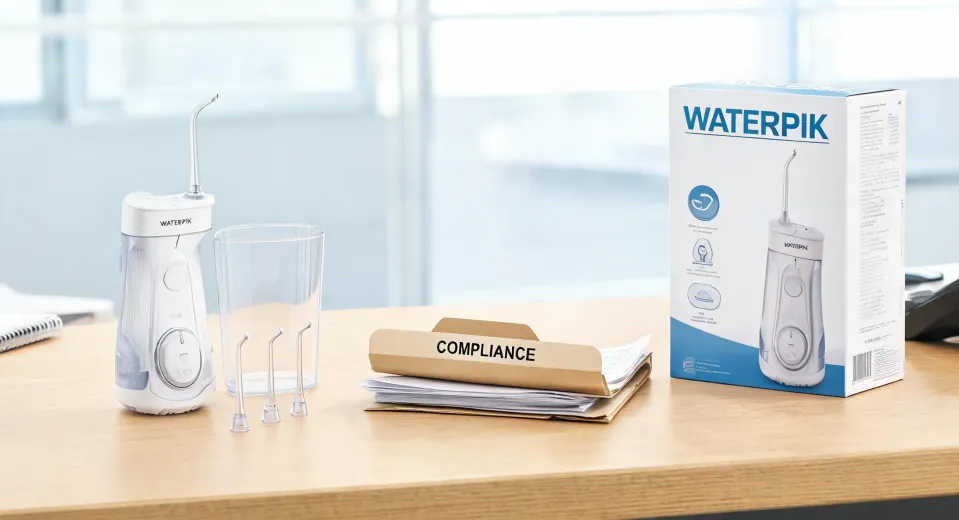
If you're evaluating the Waterpik Ultra Professional WP-660 for a dental practice or clinic, here's the direct answer: it's the most reliable water flosser we've standardized on in five years—but "professional" means professional durability, not a clinically superior clean. Compared to the standard Aquarius, you're paying for toughness and dependable uptime, not a different patient outcome.
I've been the office administrator for a 12-person dental clinic in the Pacific Northwest since 2020. I manage our supply and equipment purchasing—roughly $180,000 annually across 15 vendors—and I report to both our operations lead and our finance director. That means when a clinician says "this device broke again," it's my problem before it becomes theirs. I've ordered over 40 water flossers since 2022, replaced maybe 35 of them, and evaluated the WP-660 against every other corded and cordless unit on our distributor's price sheet.
Why We Switched to the WP-660: A Failure Story With Real Costs
In March 2024, a cordless water flosser stopped producing pressure in the middle of a patient demonstration. The hygienist had just recommended the device for the patient's gingival health, and the unit quit. No warning. She had to verbally walk the patient through the product with a dead piece of plastic in her hand. That cost us credibility and about 25 minutes of chair time. Chair time in our practice runs somewhere around $180 an hour, so—maybe $75?—it was not a huge financial hit, but the reputational cost was worse.
The replacement cordless unit failed again six weeks later. That's when I stopped buying cordless for our operatories and started pushing our distributor to keep the WP-660 in stock. The lesson was simple: an uncertain cheap device costs more than a certain expensive one. That's the time certainty premium, and it's not a theoretical idea—it's why our clinic now budgets for the WP-660.
What the WP-660 Costs vs. What It Saves
I'm not a financial analyst, so I can't give you a fancy ROI model. What I can give you is the actual math from our purchase orders.
The WP-660 typically invoices at $90–$110 per unit through our medical supply distributor in the Pacific Northwest. The Aquarius runs $70–$90. The difference is maybe $20–$30. For six operatories, that's a $120–$180 upfront difference—roughly equivalent to one hour of chair time, or one angry phone call from a hygienist whose tool died at the worst moment. Put another way: the upgrade price is less than one emergency service call from a biomedical tech.
Before we standardized on the WP-660, we went through three cordless units and two Aquarius devices in 2023 alone. Two failures required expedited shipping—I paid an extra $40 for next-day delivery on one of them. When you add the replacement costs and shipping, the "cheap" options weren't cheap at all. I don't have the exact total in front of me—I'd have to pull the invoices—but I know it was over $400 above the WP-660's purchase price for equivalent failures in a single year.
Here's where I should mention my professional boundary: I'm not a biomedical engineer or a dentist, so I can't speak to the internal pump design or the mechanics of plaque removal. What I can tell you from a buying perspective is that the WP-660's metal wand and heavier base have survived daily clinic use without the cracked housings and button failures we saw on other units.
WP-660 vs. Aquarius: What the Extra Money Actually Buys
Let's clear up a common misconception: the WP-660 and the Aquarius share the same water pulsation technology. Both have 10 pressure settings from 10 to 100 PSI. A 2016 study published in the Journal of Clinical Dentistry found water flossers significantly reduced gingival bleeding compared to string floss alone, and a 2022 study in Clinical Oral Investigations reported comparable biofilm removal to interdental brushes. Those findings apply across the Waterpik line, not just to the professional model.
Most buyers focus on whether the WP-660 cleans better than the Aquarius. What they miss is whether it will survive daily clinic use. The cleaning technology is the same—the build quality is what differs.
- Metal wand vs. plastic wand. The plastic handles on our cordless units cracked within 12–18 months. The WP-660 wand has been dropped, banged around, and occasionally used as a pointer by our hygienists—it still works.
- Heavier, grippier base. The WP-660 stays put on the counter. The Aquarius slides around if the surface is wet.
- 650 ml reservoir vs. 450 ml. A full 60-second cleaning at medium pressure without a refill. With the Aquarius, you run out around 45 seconds.
- Simpler controls. Mechanical switch instead of membrane buttons. Membrane buttons and wet hands don't mix—we learned that the hard way.
The one practical downside is supply. The WP-660 has been on backorder with our main distributor twice in the past year, each time for about four to six weeks. If you decide to standardize on it, order ahead and keep at least one spare unit on the shelf.
Nozzle Variety: More Than a Marketing Story
From the outside, seven nozzles looks like a way to justify a higher price. The reality is that in a dental office, each tip has a purpose:
- Classic Jet Tips (×2): standard demonstrations and general patient use
- Orthodontic Tip: we hand this to patients with braces so they can try cleaning around brackets
- Plaque Seeker Tip: the workhorse for implants, crowns, and bridges; tapered rubber tip cleans around margins
- Pik Pocket Tip: delivers water directly into periodontal pockets—useful for maintenance patients
- Tongue Cleaner: patients love this one; less clinical, but it helps with compliance
- Toothbrush Tip: not a replacement for brushing, but convenient for patients who travel
Our hygienists specifically ask for the Plaque Seeker Tips when we restock. Replacement packs cost around $12–$15 and disappear faster than any other tip. If you're budgeting, add that to your annual expenses.
Honest Limitations and a Couple of Gotchas
I want to be clear about where the WP-660 isn't the right answer:
- It's physically larger than the photos suggest. The footprint is roughly 4.5 by 4.5 inches, and it's taller than the Aquarius. We had to mount two units on corner shelves because our operatory counters were too shallow.
- The reservoir lid is not dishwasher safe. I found this out when a staff member threw it into the dishwasher—it warped, and we paid $14 for a replacement lid.
- It won't make every patient prefer water flossing. For patients who use string floss daily and are happy with it, there's no compelling reason to switch. The device is an alternative, not a clinical mandate.
If you're a consumer buying for your own bathroom, I'd actually recommend the Aquarius. The extra durability only matters in multi-user settings where devices get dropped and used dozens of times a day. For home use, the extra cost doesn't buy you much. At least, that's been my experience after years of comparing the two side by side.
Final Procurement Recommendations
For administrators and dental practice managers, here's my bottom line:
- Standardize on the WP-660 for treatment rooms. The reliability premium is worth the cost.
- Keep one backup unit in storage. Backorders are real, and six weeks is too long to wait.
- Stock replacement tips. You will go through them far faster than you expect.
- Don't buy cordless for daily clinic use. They break. We still have cordless units for off-site events, but the failure rate is unacceptable for operatories.
I do not mean to suggest the WP-660 is perfect—no device is. It won't transform your patient outcomes or replace traditional flossing. What it does is reduce the risk of a device failing when you need it most. After five years of managing purchasing, I've learned that reliability is the feature that keeps us from ordering again and again. That certainty is worth the premium.
Last updated April 2025. Prices are from our Pacific Northwest medical supply distributor's invoices and regional online listings. Your pricing may vary.

Greta Lindholm
Greta Lindholm is a household refrigeration analyst covering French-door, side-by-side, top- and bottom-mount refrigerators, mini fridges, beverage coolers, chest freezers, and upright freezers. She applies IEC 62552 and IEC 60335-2-24 while comparing energy consumption, usable volume, pull-down time, compartment temperature stability, freezing capacity, noise, door-seal leakage, refrigerant charge, and ambient-temperature performance. Her guides help importers, distributors, private-label teams, and appliance engineers select platforms around climate class, storage mix, efficiency labels, cabinet dimensions, service access, shipping density, and warranty exposure.