Waterpik Cordless Select vs Cordless Advanced: The Cheaper Model Usually Isn't Cheaper
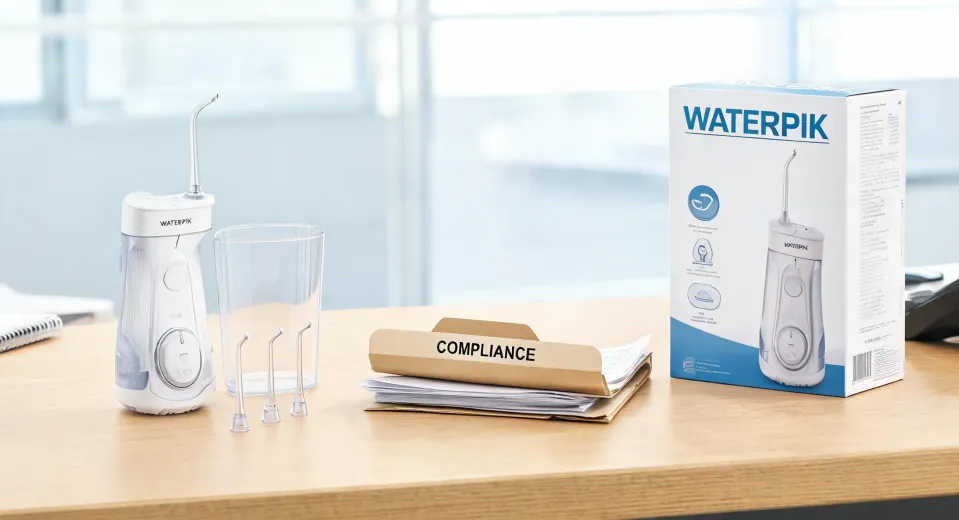
I've handled procurement for eight dental practices over the last seven years, and I've made—and documented—14 purchasing mistakes that totaled roughly $23,000 in wasted budget. I keep that list visible to my team because it's cheaper for them to learn from my failures than to repeat them. The most expensive lesson on the list isn't about a delayed shipment or a bad vendor. It's about water flossers.
Every time I train a new hire, I lead with one opinion: choosing the Waterpik Cordless Select over the Waterpik Cordless Advanced to save money is usually the more expensive decision a clinic can make. That sounds backwards until you actually track the costs.
The Price Gap Is Not the Problem
First, the baseline. As of April 2025, typical retail pricing on Amazon and major distributors looks like this:
- Cordless Select (WF-10): roughly $60–$70
- Cordless Advanced (WF-12): roughly $90–$110
Actually, I've seen the Advanced dip under $90 during sales, which shrinks the gap even more—and clinic bulk pricing can change these numbers entirely, so treat them as ballpark, not quote. If you search "waterpik water flosser Amazon," the Select tends to outrank the Advanced on review volume, partly because a lower price point is what most shoppers sort by. That doesn't make it the better clinical investment.
The real issue isn't the $30–$40 delta. The real issue is what happens after the patient walks out the door. The "a water flosser is a water flosser" thinking comes from an era when these devices were all essentially the same pump-and-reservoir design. That era is over.
Argument #1: The reservoir runs dry before the patient finishes
The Select holds about 45 seconds of continuous water. The Advanced holds about 90 seconds. If you're an accountant, that looks like a harmless product spec. If you're a hygienist, you know exactly what 45 seconds means: the patient runs out midway through the lower arch.
Most adults take 60 to 90 seconds to move that tip methodically through the posterior teeth (or at least, that's the pace we recommend in perio maintenance). When the device runs out at 45 seconds, the patient refills the reservoir and resumes. A refill is a four-step interruption involving taking the unit apart, filling it at the sink, and putting it back together—while it's slippery, at 10 p.m., when the last thing they want is another home-care chore. I've had patients tell me they stopped using it because it felt like the device was punishing them.
And an abandoned device is worse than a device never sold. The patient doesn't blame themselves; they blame the product category. We've heard "water flossers don't really work" from multiple patients over the years—and in each case, they were describing the 45-second reservoir experience, not the clinical evidence. That's how a low-spec purchase quietly damages the outcome the practice was trying to improve.
Argument #2: Pulse mode is a clinical tool, not a luxury
The Select has three pressure settings. The Advanced has those three plus a pulse massage mode. I get eye rolls when I bring this up because pulse mode sounds like a spa feature. In periodontally involved patients, targeted pulsation gives me something concrete to prescribe: "Use pulse mode against the inflamed interproximal areas for two minutes."
That's not just rhetoric. The clinical literature on oral irrigators—including the published research behind Waterpik's ADA Seal of Acceptance—supports their value for reducing gingivitis and bleeding when used as part of a complete home-care routine. But the device only realizes that value if the patient actually uses it. A static-pressure unit gives the patient less feedback, less direction, and fewer reasons to stay consistent. The pulse mode is a compliance tool, not a spa setting.
I standardized our perio home-care kits on the Advanced in 2023, and the feedback from patients shifted quickly. Instead of "which setting should I use?" it became "this mode feels strange on my gums"—which is exactly the behavior change I was hoping for.
Argument #3: Battery life is quietly expensive
Here's something nobody puts on a spec sheet: how many front-desk calls a device generates. The Select's battery indicator isn't wrong; it's just less informative. Patients called saying the unit "felt weaker," and the first question was always "is the battery charged?" (surprise, surprise—ninety percent of the time, that was it). The Advanced has clearer LED status feedback and longer run-time between charges. I want to say it's roughly two weeks on a charge versus about a week on the Select, but don't quote me on the exact hours—the practical point is that the Advanced generated far fewer of those calls.
Those calls cost money. Ten minutes of front-desk time is maybe $4–$5 in combined wages, and it's time not spent on bookings or reports. Multiply that across dozens of calls over a year, and the total labor cost of the "cheaper" unit starts to look a lot less cheap.
Never expected the battery spec to be the one that convinced my boss's budget spreadsheet, but there it was: the cheaper model had a higher support burden before it even failed.
But Isn't the Select Enough for Most Patients?
I get this objection in every training. "For a healthy patient who wants a quick rinse after lunch, the Select is fine."
Yes, it is—for that specific patient. But practices don't buy per patient; they buy per SKU, and the Select ends up going home with everyone who asks for a cordless water flosser. The moment a moderate-to-advanced perio case leaves with the Select, the 45-second reservoir and the missing pulse mode are baked into their home-care plan. That's not cost-effective; it's false economy.
The other pushback I hear is that the clinic isn't a prescriber, just a reseller: "We stock what patients ask for." With respect, that was exactly my 2022 approach, and it produced my $23,000 lesson list. If a patient asks for the Select, help them buy it. But a dental practice's job at the recommendation point is to steer. If a periodontal patient is about to buy a $65 device that will frustrate them into non-compliance, the kind thing is to explain the difference. That's how you keep a patient in active care instead of watching them drop off the recall list.
The Checklist I Use Now
I've turned all of this into four questions I ask before we stock any home-care device:
- How long does it run per reservoir fill?
- Does it have a mode I can prescribe, or only a flow setting?
- How much front-desk time will it generate after the sale?
- What happens to the patient's outcome if they stop using it?
Question four is the uncomfortable one, and it's the one that changed my purchasing philosophy. A patient who abandons a home-care device doesn't just fail their treatment plan—they start telling other patients it doesn't work. That cost never shows up on a manufacturer's spec sheet.
I still stock the Select. It's the right call for a staff member, a frequent traveler, or a patient who genuinely balks at the price at the counter. But it's no longer our default recommendation for clinical home care.
So I'll end where I started: for most dental clinics, the Waterpik Cordless Advanced is the cheaper model, not the more expensive one. The purchase price is what you pay at the register; the total cost is what your patients actually do with the device over the twelve months after. Price is what you pay, and clinical follow-through is what you get back.

Greta Lindholm
Greta Lindholm is a household refrigeration analyst covering French-door, side-by-side, top- and bottom-mount refrigerators, mini fridges, beverage coolers, chest freezers, and upright freezers. She applies IEC 62552 and IEC 60335-2-24 while comparing energy consumption, usable volume, pull-down time, compartment temperature stability, freezing capacity, noise, door-seal leakage, refrigerant charge, and ambient-temperature performance. Her guides help importers, distributors, private-label teams, and appliance engineers select platforms around climate class, storage mix, efficiency labels, cabinet dimensions, service access, shipping density, and warranty exposure.