Waterpik Water Flosser Plus Sonic Toothbrush: A Scenario Guide for Dental Teams
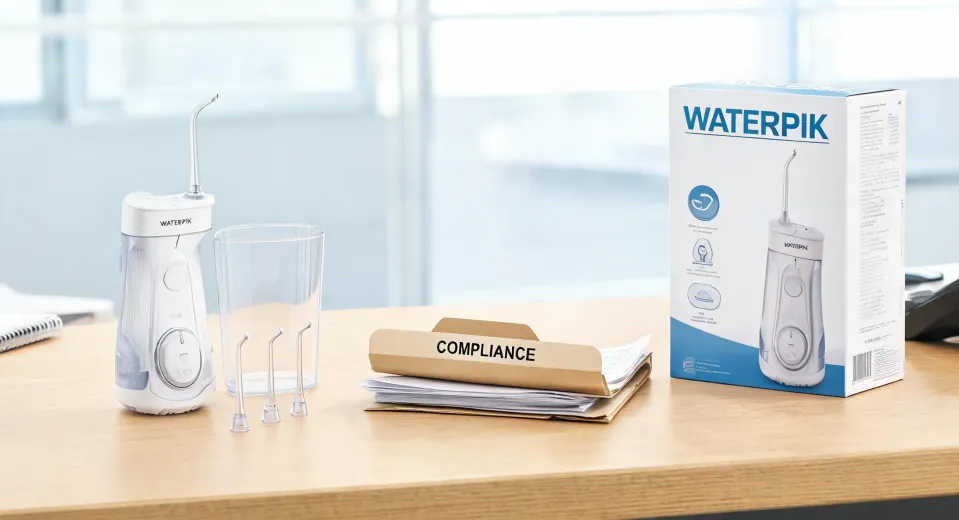
Not every patient needs the same Waterpik. If you've ever tried to answer the question 'which one should I get?' you already know that there's no single right answer. The right setup depends on whether you're dealing with an adult who won't manual floss, a child with braces, or a clinic trying to stock the right take-home units.
Most product guides start with a feature comparison table. This one won't. In my role coordinating oral care supplies for a multi-provider dental clinic, I've handled 200+ rush orders for water flossers and replacement tips. Last quarter alone, we processed 47 rush orders with 95% on-time delivery. The device with the highest PSI or the most modes is not the device that saves gums. It's the device patients actually use more than once.
You're not choosing a product. You're choosing a routine that has a chance of surviving real life.
What I mean by that is the best Waterpik for your practice or family may be the one you'd never put on a 'top specs' list. It's the one that fits the bathroom layout, the child's hand size, and the adult's patience. So let's break it into three scenarios.
Scenario 1: The Waterpik Water Flosser Plus Sonic Toothbrush for Adults
If you're talking to an adult patient who struggles with manual flossing—whether because of dexterity, braces, implants, or just habit—the Waterpik water flosser plus sonic toothbrush combo is the setup I recommend most. The Sonic-Fusion combines a sonic toothbrush and a water flosser in one base. That's not a gimmick. It means the patient doesn't have to build two separate habits, and from a practice standpoint it means fewer SKUs to stock and explain.
What I like about it from a procurement view: one power base, one reservoir, one set of standard replacement tips. What I don't like: it's more expensive than a standalone flosser, and if the motor fails, the patient loses both functions. Also, if a patient already has a sonic toothbrush they like, the combo means buying a duplicate function they don't need. That's why I usually ask about the patient's current toothbrush before recommending the combo.
When I'm triaging a recommendation, I ask three things: Are they okay with the idea of a water flosser? Do they believe it can clean where floss reaches? And are they going to charge it or replace batteries? The last one is the one most reviews ignore. A cordless unit with a dead battery is a paperweight. The combo models are mostly corded, which solves that—but if the bathroom outlet is on the other side of the mirror, it becomes a hassle.
What I tell patients about technique: start on the lowest pressure and build up. Does that sacrifice cleaning power at first? Maybe. But a patient who uses a low setting every day will outperform a patient who uses the maximum setting once. (I learned this after a patient came back with sore gums and stopped using the unit entirely because I'd told her to 'just crank it up.')
Scenario 2: Waterpik Water Flosser for Kids Reviews, Decoded
If a parent asks about Waterpik for kids reviews, the answer isn't 'yes, buy it.' The right answer depends on the child's age and coordination more than the marketing. The Waterpik water flosser for kids reviews are generally positive because the product solves a real problem: kids with braces have tiny crevices and limited patience. But 'positive reviews' are not the same as 'right for this child.'
For a child between 6 and 10 who is starting to manage their own brushing, a kids' Waterpik is genuinely useful. The smaller reservoir, lower pressure settings, and slimmer handle make it easier for small hands. I've bought these units for a pediatric dentist who runs a hygiene program for elementary school kids. They work.
For a child younger than 6, I'm hesitant. Not because the device is dangerous—it's not—but because a motorized flosser can become a toy, and water ends up everywhere. I'm not a pediatric dentist, so I won't draw a hard age line. What I can tell you from a practice operations perspective is that the parents who ask for kids' Waterpiks usually are the ones who'll need a follow-up appointment to adjust the technique.
Here's where the typical review advice goes wrong. For an older child or young teen, the kids' model is often not the best purchase. A cordless adult Waterpik on the lowest setting gives more pressure range and won't be outgrown in two years. The kids' model's pressure is capped for safety—fine for a 7-year-old, but for a 13-year-old with braces it can feel ineffective. A teen who feels the device 'does nothing' stops using it.
So: if the child is 6-10 or has a smaller mouth, the kids' model makes sense. If the child is 11+ and coordinated enough to handle a standard tip, a regular cordless model on low is a better long-term value. That goes against a lot of advice online, but I've watched enough returns come back to trust it.
One more warning: I once ordered generic replacement tips for a kids' Waterpik because they looked identical to the branded tips. They didn't seat properly. We threw out $200 in useless tips. If you're stocking for a practice, buy the exact replacement tips listed for that model. The 'one size fits all' approach does not apply.
Scenario 3: A Dental Practice Buying Waterpik Units for Demos and Take-Home Kits
This scenario is for the dental practice team, not the patient. What you stock for in-office demos should be different from what you offer as a take-home option.
At our clinic, we keep the corded Waterpik Aquarius at the hygiene station with a large reservoir, because standing water is a pain in the middle of a consultation (I really should have measured the demo counter before approving that remodel). For take-home programs, we keep cordless units. Patients choose cordless more often because bathroom outlets are inconvenient.
If you're buying in bulk for a new location, build in a lead-time buffer. In 2023, a practice lost a $15,000 opening because the ordering team tried to save $400 using slow shipping on 30 Waterpik units. The units arrived two days after the open house. Since then, our policy requires a 48-hour buffer and live tracking for any non-stock order over 10 units. I've had to use that policy twice, and both times it saved us.
Another thing I've learned the hard way: verify the cord/plug type for bulk orders. It sounds obvious, but I know a clinic that ordered 20 corded units for an office and then discovered the sink area had no outlet near the demos. The numbers said 'best price per unit.' My gut said 'check the outlet map.' I didn't. We paid an electrician to add a GFCI outlet before the next patient day.
According to USPS (usps.com), standard First-Class Mail delivery is 3-5 business days. That's acceptable for replacement tips if you have a healthy inventory. If you're down to the last five, pay for the upgrade. The $35 rush shipping is cheaper than rescheduling a hygiene event.
So Which Scenario Are You In?
Here's the checklist I use when a request comes in. You're in Scenario 1 if the end user is an adult who wants to simplify hygiene without giving up effectiveness. You're in Scenario 2 if the user is a child who needs a gentler entry—or an older child who needs more pressure range. You're in Scenario 3 if you're buying for a practice, not just one patient.
Still uncertain? Ask yourself three questions:
- Who will be holding the device every day?
- How long has their current routine gone unchanged? If they've never flossed consistently, a combined device wins.
- Are you buying one unit or twenty? Twenty units means you need a supplier with reliable lead times, not just a low price.
A Quick Note on 'Reviews' and 'Clinically Proven'
If you're reading this because you typed 'waterpik water flosser for kids reviews' into Google, you'll see a mix of parent reviews, dental blogs, and product pages. Some are useful. Some are not. Per FTC guidelines (ftc.gov), marketing claims on health devices need to be truthful and substantiated. When a product says 'clinically proven,' there should be an actual study behind it. When a review says 'my kid loves the stickers,' that's about engagement, not oral health.
I'm not saying ignore reviews. I'm saying use them as a starting point, not a prescription. A parent's story about a 9-year-old changing their routine is valuable. A one-sentence 'this is the best' with no explanation is not.
At the end of the day, the Waterpik decision is less about the device itself and more about the person using it. The right one is the one that doesn't end up in a drawer. If you're still trying to decide, start by classifying your scenario. Then check the pressure range, tip compatibility, and lead time. That's the process I use when a rush order lands on my desk, and it's the reason we can turn around emergency requests instead of guessing.

Greta Lindholm
Greta Lindholm is a household refrigeration analyst covering French-door, side-by-side, top- and bottom-mount refrigerators, mini fridges, beverage coolers, chest freezers, and upright freezers. She applies IEC 62552 and IEC 60335-2-24 while comparing energy consumption, usable volume, pull-down time, compartment temperature stability, freezing capacity, noise, door-seal leakage, refrigerant charge, and ambient-temperature performance. Her guides help importers, distributors, private-label teams, and appliance engineers select platforms around climate class, storage mix, efficiency labels, cabinet dimensions, service access, shipping density, and warranty exposure.