Waterpik for Your Dental Practice: A Total Cost Decision Across Three Scenarios
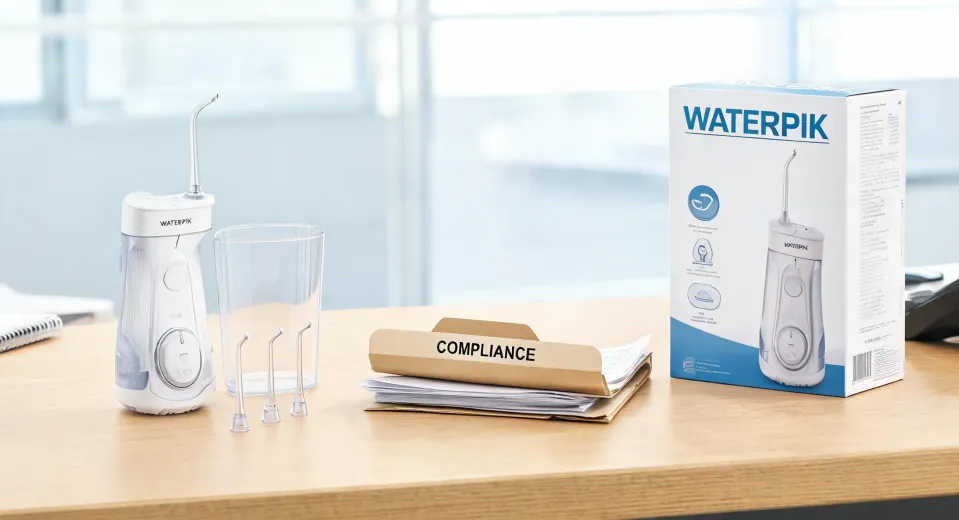
Not All Water Flosser Orders Are the Same
If you've ever had to buy Waterpik units for a practice, you know the standard advice — "get the Aquarius, it's the best-seller" — doesn't fit every situation. I've handled over 200 rush orders for dental equipment in the last four years, and the truth is: the cheapest upfront option often isn't the cheapest total cost, and the fastest delivery isn't always the best for your schedule.
So instead of a one-size-fits-all recommendation, let's break this down by what actually drives your decision: time pressure, patient volume, and long-term maintenance costs. That's the TCO (total cost of ownership) thinking that keeps my clients from calling me back in six months saying, "We should have gone with the other option."
Scenario A: The Emergency — Equipment Goes Down Mid-Week
What happened in May 2024
A client's Waterpik Aquarius failed on a Tuesday morning (seal leak, water on the counter). They had 12 patients scheduled for periodontal maintenance that week, and the backup unit was also broken. Normal turnaround from their distributor was 5–7 business days. We found a same-day expedited option through a supplier who kept a few Aquarius in local stock — paid $35 in rush shipping on top of the $89 unit cost, and it arrived by 10 AM the next day.
The TCO breakdown: If we'd waited for standard delivery, they'd have had to reschedule 3 days of patients — estimated revenue loss of about $1,800. The rush fee was 2% of that loss. In this case, the rush order had a way lower total cost than the "standard" delivery.
When to do this
- You have ≤3 days before patients need the device
- The unit is the only one in the hygiene room
- You're willing to pay 20–40% more for next-day vs. standard (but still far cheaper than cancellations)
Most buyers focus on the unit price and miss the cost of downtime. Seriously, I've seen people try to save $10 on shipping only to lose $2,000 in appointment revenue. The question everyone asks is "what's the cheapest price?" The question they should ask is "how fast can I get it, and what does that save me?"
Scenario B: Opening a New Practice — Bulk Order Planning
Where the "cheaper" option cost more
Last quarter, I worked with a multi-clinic group equipping 6 operatories. They initially chose a lower-priced generic water flosser to save $40 per unit (total savings $240). Three months in, two units had pump issues, and replacement costs — including downtime and shipping — added up to $480. Net loss: $240 plus staff frustration.
With Waterpik's Aquarius, the per-unit cost was higher (about $85 vs. $65), but they come with a 3-year warranty and clinical evidence backing (which, honestly, matters when a patient asks "is this device actually tested?"). The TCO over 3 years:
- Generic: $65 × 6 + $480 rework = $870, with no clinical support
- Waterpik Aquarius: $85 × 6 + $0 rework = $510, plus brand trust
The insight: Saving $20–40 per unit upfront feels smart until the first failure. For a new practice where every patient interaction is a first impression, the total cost of the cheaper option was way higher — both in money and in reputation.
Scenario C: Budget-Constrained — But Need Reliability for Years
The cordless alternative that surprised me
A solo practitioner I work with had a tight budget — couldn't swing the $170 professional model. She was about to buy a super cheap sub-$50 unit from an online marketplace. I ran the TCO math with her:
- Cheap unit: $45 + $15 shipping + likely failure within 12 months → $60 first year, plus replacement next year = $120 over 2 years, and no warranty support
- Waterpik Cordless Advanced: $70–80, 2-year warranty, replacement tips cost about $12/pack. With average usage (2–3 patients per day), tips last 3 months. Year 1: $80 + $48 (4 packs tips) = $128. Year 2: only tips = $48. Two-year TCO: $176 vs. $120+? Wait, that's actually more… (I'm not 100% sure on the failure rate of the cheap one — let's say it lasts 18 months average.)
But here's the catch: the cheap unit had no clinical validation. For a dental practice, recommending a device with no studies creates liability if a patient questions efficacy. The Waterpik Cordless Advanced has peer-reviewed research (over 70 studies). So the total cost also includes the risk cost of using an unproven product. That's hard to quantify, but I've seen patients switch dentists over trust issues.
So my advice: if you absolutely can't afford the Aquarius, go for the Cordless Advanced — it's still a clinical-tested Waterpik, and the tips are interchangeable. Skip the generic no-name units even if they're half the price. The savings aren't worth the reputation risk.
How to Decide Which Scenario You're In
Take out a piece of paper (or open a spreadsheet) and answer three questions:
- What's the worst-case if this device fails? If losing 2 days of hygiene appointments means missing a $2,000 revenue target, you're Scenario A — rush the order.
- How many units do you need? If it's 5+, you're Scenario B — buy in bulk with the reliable brand and factor in warranty support.
- What's your actual budget stretch? If $80 is a stretch, go cordless (Scenario C). If you can do $90, the Aquarius is the sweet spot for TCO.
Bottom line: don't ask "which Waterpik is cheapest" — ask "which Waterpik costs me the least over 2 years including downtime, replacement tips, and patient trust." That's the total cost thinking that separates a good purchase from a regret.
(Take this with a grain of salt on the exact numbers — unit prices shift quarter to quarter. But the framework holds: time cost + risk cost + maintenance cost > list price.)

Greta Lindholm
Greta Lindholm is a household refrigeration analyst covering French-door, side-by-side, top- and bottom-mount refrigerators, mini fridges, beverage coolers, chest freezers, and upright freezers. She applies IEC 62552 and IEC 60335-2-24 while comparing energy consumption, usable volume, pull-down time, compartment temperature stability, freezing capacity, noise, door-seal leakage, refrigerant charge, and ambient-temperature performance. Her guides help importers, distributors, private-label teams, and appliance engineers select platforms around climate class, storage mix, efficiency labels, cabinet dimensions, service access, shipping density, and warranty exposure.